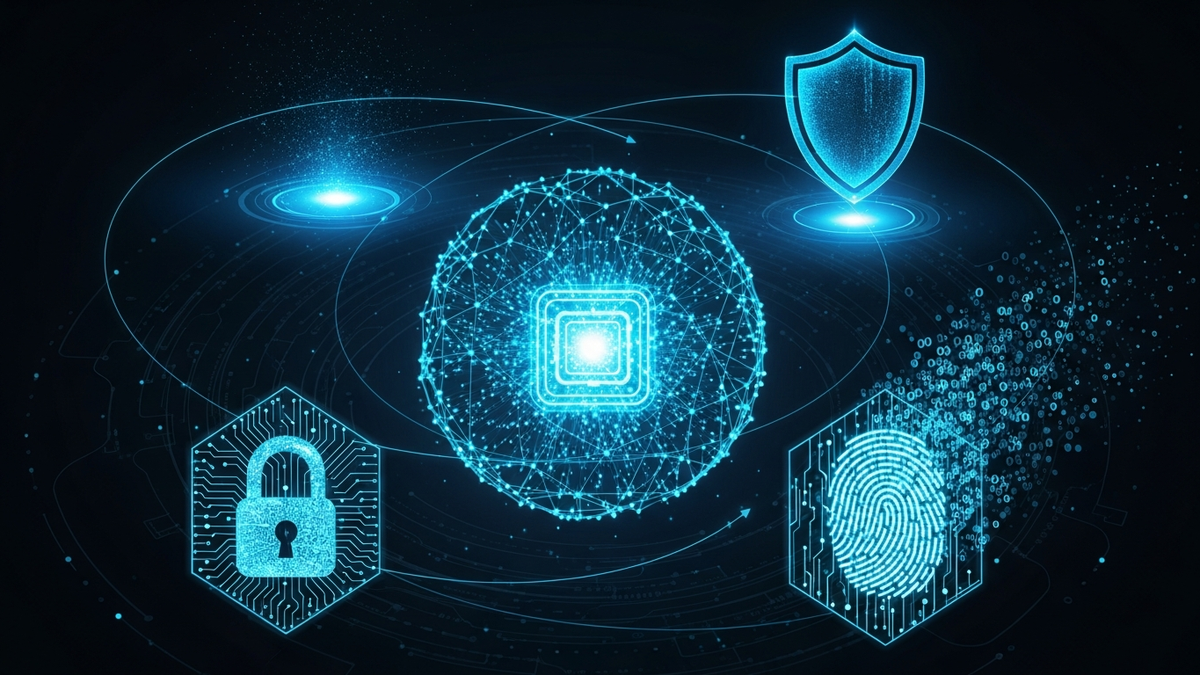
Essential Data Security Controls Every Company Needs to Implement
In today's digital landscape, data has become one of the most valuable assets any organization possesses. Customer information, intellectual property, financial records, and operational data form...
Introduction
In today's digital landscape, data has become one of the most valuable assets any organization possesses. Customer information, intellectual property, financial records, and operational data form the foundation of modern business operations. However, this dependency on data also creates significant vulnerabilities. High-profile breaches at major corporations regularly make headlines, exposing millions of customer records and costing companies not just millions in remediation costs, but also irreparable damage to their reputation and customer trust.
Data security is no longer an optional consideration or solely the concern of IT departments—it's a fundamental business requirement that touches every aspect of an organization. Whether you're running a small startup, managing a mid-sized enterprise, or overseeing operations at a large corporation, implementing robust data security controls is essential for protecting your organization's most critical assets.
This comprehensive guide explores the essential data security controls every company needs to implement, regardless of size or industry. We'll examine the fundamental concepts behind these controls, explore how they work in practice, review real-world examples of both successes and failures, and provide actionable steps you can take to strengthen your organization's security posture. By the end of this article, you'll have a clear understanding of what security controls are necessary and how to implement them effectively within your organization.
Core Concepts
Before diving into specific controls, it's important to understand the fundamental concepts that underpin effective data security strategies.
The CIA Triad
The foundation of information security rests on three core principles known as the CIA Triad:
**Confidentiality** ensures that sensitive information is accessible only to those authorized to view it. This involves protecting data from unauthorized disclosure through encryptionEncryption🛡️The process of converting data into a coded format that can only be read with the correct decryption key., access controls, and proper authentication mechanisms.
**Integrity** ensures that data remains accurate, complete, and unmodified except by authorized individuals. This protects against both malicious tampering and accidental corruption.
**Availability** ensures that authorized users can access data and systems when needed. This involves implementing redundancy, backup systems, and protection against denial-of-service attacks.
Defense in DepthDefense in Depth🛡️A security strategy using multiple layers of protection so that if one layer fails, other layers continue to provide security.
Defense in depth, also known as layered security, is a strategy that employs multiple security controls at different levels of your infrastructure. Rather than relying on a single security measure, this approach assumes that no single control is perfect and creates overlapping layers of protection. If one layer fails, others remain to prevent or detect a security breach.
The Principle of Least Privilege
This principle states that users should have the minimum level of access necessary to perform their job functions—nothing more. By limiting access rights, you reduce the potential damage from both malicious insiders and compromised accounts.
Risk-Based Approach
Not all data and systems require the same level of protection. A risk-based approach involves identifying your most critical assets, assessing the threats they face, evaluating vulnerabilities, and implementing controls proportionate to the level of risk. This ensures you're investing resources where they'll have the greatest security impact.
How It Works
Let's examine the essential data security controls and how they function to protect your organization's information assets.
1. Access Control and Authentication
Access control determines who can access what resources within your systems. This works through a combination of:
**Authentication** verifies user identity through credentials like passwords, biometric data, or security tokens. Modern implementations use multi-factor authentication (MFA), which requires users to provide two or more verification factors—typically something they know (password), something they have (phone or security keySecurity Key🛡️A physical hardware device used for authentication, providing stronger protection than SMS or app-based 2FA.), and something they are (fingerprint or facial recognition).
**Authorization** determines what authenticated users can do once granted access. This is typically implemented through role-based access control (RBAC), where permissions are assigned based on job functions rather than individuals.
In practice, when an employee attempts to access a company database, the system first authenticates their identity through username and password plus a code from their authentication app. Once authenticated, the authorization system checks their role—perhaps "Sales Representative"—and grants access only to customer contact information, not financial records or product development data.
2. Data Encryption
Encryption transforms readable data (plaintext) into an unreadable format (ciphertext) using mathematical algorithms and encryption keys. This works in two primary scenarios:
**Encryption at rest** protects stored data on hard drives, databases, and backup media. Even if physical storage devices are stolen, the data remains unreadable without the encryption keys.
**Encryption in transit** protects data moving between systems, such as when employees access company resources remotely or when systems communicate with each other. This is typically implemented through protocols like TLS/SSL for web traffic and VPNs for remote access.
The encryption process involves selecting appropriate algorithms (such as AES-256 for symmetric encryption), generating secure keys, and implementing key management practices to protect those keys with the same rigor as the data itself.
3. Network Security Controls
Network security controls create defensive perimeters and monitor traffic flowing through your infrastructure:
**Firewalls** act as gatekeepers between trusted internal networks and untrusted external networks, filtering traffic based on predefined security rules. Modern next-generation firewalls also inspect application-layer traffic and detect sophisticated threats.
**Network segmentation** divides your network into separate zones with different security requirements. Your payment processing systems might reside in a highly restricted zone, while guest WiFi operates in a completely isolated segment.
**Intrusion Detection and Prevention Systems (IDS/IPS)** monitor network traffic for suspicious patterns and known attack signatures, alerting administrators to potential breaches or automatically blocking malicious activity.
4. Endpoint Protection
Endpoints—laptops, desktops, mobile devices, and servers—represent potential entry points for attackers. Endpoint protection involves:
**Antivirus and anti-malware software** that scans for known threats and detects suspicious behavior patterns that may indicate new, previously unknown malware.
**Endpoint Detection and Response (EDR)** solutions provide continuous monitoring, threat detection, and automated response capabilities across all endpoints.
**Device management** policies that ensure all endpoints meet minimum security standards before connecting to company resources, including updated operating systems, enabled encryption, and installed security software.
5. Data Backup and Recovery
Backup systems create copies of critical data and systems, enabling recovery after data loss events including ransomware attacks, hardware failures, or natural disasters.
Effective backup strategies follow the 3-2-1 rule: maintain three copies of data, on two different media types, with one copy stored offsite. Modern implementations often use continuous backup to cloud storage, creating multiple recovery points throughout each day.
Regular testing of recovery procedures is crucial—backups are worthless if you can't actually restore from them when needed.
6. Security Monitoring and Logging
Comprehensive logging captures events across your systems—user logins, file access, configuration changes, network connections, and security alerts. These logs feed into Security Information and Event Management (SIEM) systems that correlate events across different sources, identify patterns indicating security incidents, and generate alerts for security teams.
This creates an audit trail for investigating incidents and demonstrating compliance with regulatory requirements.
7. VulnerabilityVulnerability🛡️A weakness in software, hardware, or processes that can be exploited by attackers to gain unauthorized access or cause harm. Management
Vulnerability management is an ongoing process of identifying, evaluating, and remediating security weaknesses:
**PatchPatch🛡️A software update that fixes security vulnerabilities, bugs, or adds improvements to an existing program. management** ensures operating systems, applications, and firmwareFirmware🏠Permanent software programmed into a device's hardware that controls its basic functions. receive security updates promptly, closing known vulnerabilities before attackers can exploitExploit🛡️Code or technique that takes advantage of a vulnerability to cause unintended behavior, such as gaining unauthorized access. them.
**Vulnerability scanning** uses automated tools to probe systems for known weaknesses, misconfigurations, and missing patches.
**Penetration testing** involves authorized security professionals attempting to breach your defenses, identifying vulnerabilities that automated scans might miss.
8. Security Awareness Training
The human element remains the weakest link in most security programs. Security awareness training educates employees about:
Regular training, supplemented with simulated phishing campaigns, helps build a security-conscious culture.
Real-World Examples
Examining real-world incidents and success stories illustrates why these controls matterMatter🏠A new universal smart home standard backed by Apple, Google, and Amazon for cross-platform compatibility. and how they work in practice.
Example 1: The Target Breach (2013)
The massive Target breach that exposed 40 million credit card records and 70 million customer records demonstrates the consequences of inadequate security controls.
Attackers initially compromised a third-party HVAC vendor with access to Target's network. From there, they moved laterally through the network, eventually reaching point-of-sale systems. The breach succeeded despite Target having intrusion detection systems that actually flagged the suspicious activity—those alerts were ignored.
**Lessons learned**: Network segmentation could have prevented lateral movementLateral Movement🛡️Techniques attackers use to move through a network after initial compromise, seeking additional systems to control and data to steal. from HVAC systems to payment systems. Proper monitoring and incident response procedures would have stopped the breach early. Third-party riskThird-Party Risk📖The potential security threats that arise from an organization's relationships with external vendors, suppliers, and partners who have access to systems or data. management is essential, as vendors often represent the weakest link.
Example 2: Maersk's Ransomware Recovery (2017)
When the NotPetya ransomware struck shipping giant Maersk, it encrypted approximately 45,000 computers and 4,000 servers, effectively shutting down operations worldwide. However, Maersk recovered remarkably quickly—within 10 days—largely due to one factor: a comprehensive
Related Reviews
REOLINK 4K Security Camera System Review: Professional PoE Surveillance at DIY Prices
The REOLINK 4K PoE security system delivers 8MP clarity, smart person/vehicle detection, 24/7 recording with 4TB storage, and plug-and-play installation for comprehensive home surveillance.
Ring Outdoor Cam Pro Review: 4K Security Camera with Radar-Powered Motion Detection
The Ring Outdoor Cam Pro delivers Retinal 4K video, 10x enhanced zoom, Low-Light Sight for true color night vision, and radar-powered 3D motion detection for precise security alerts.
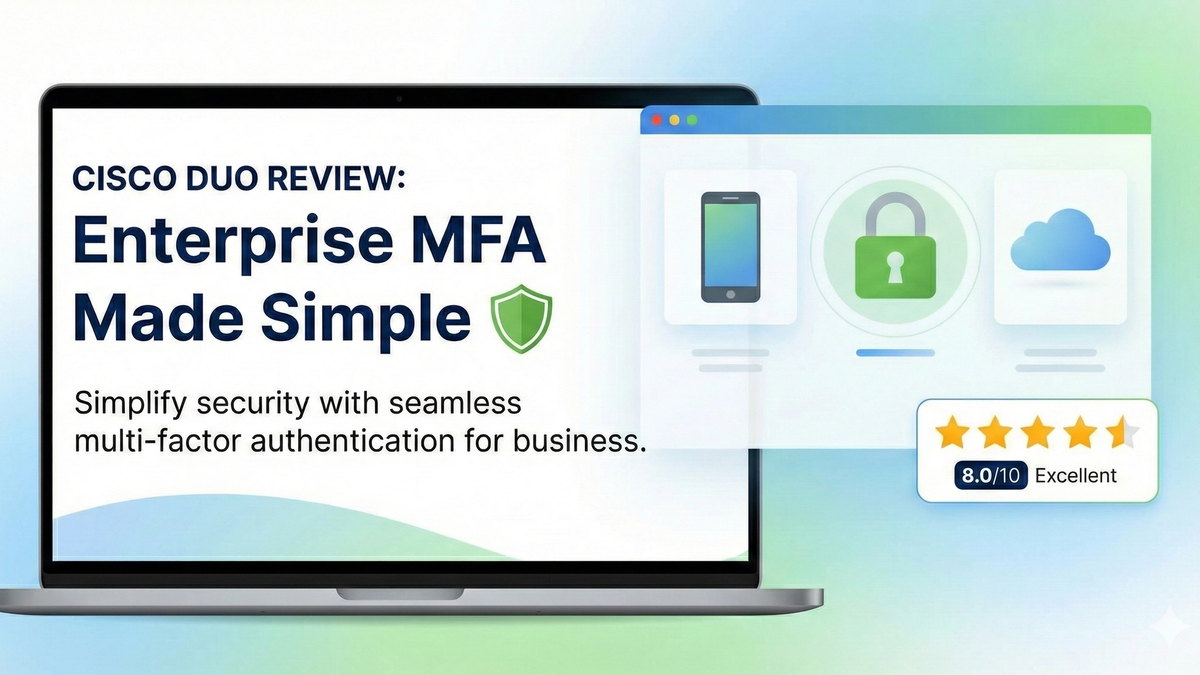
Cisco Duo Review: Enterprise MFA Made Simple
Cisco Duo delivers robust multi-factor authentication with one of the smoothest user experiences in the enterprise MFA space. While pricing can escalate quickly for larger teams, its device trust and adaptive policies make it a solid choice for security-conscious organizations.