
How to Hunt for Forged Admin Tokens and Backdoor Accounts
A six-step process for investigating a system after an authentication bypass: exposure windows, identity inventory, audit logs, rotation order, and persistence checks.
Why Patching Is Not the Finish Line
Authentication-bypass vulnerabilities have an unpleasant property that memory-corruption bugs mostly lack: successful exploitation produces artifacts that look legitimate. When the JFrog Artifactory bypass (CVE-2026-82329) was exploited in the wild in early September 2026, watchTowr's honeypotHoneypot🛡️A decoy system deployed to be attacked so defenders can observe exploitation attempts safely. Honeypot networks give early warning that a vulnerability has moved from theoretical to actively exploited, often before official catalogs like CISA KEV confirm it. telemetry showed attackers minting administrator tokens, enumerating users and credential sets, and creating backdoor accounts. Every one of those actions leaves behind objects — tokens, accounts, permission grants — that your platform considers perfectly valid.
That means upgrading closes the door but says nothing about who walked through it first. If a system was internet-reachable while vulnerable, the honest posture is: assume exploitation until the evidence says otherwise. This guide is the working process for producing that evidence.
Step 1: Establish the Exposure Window
Fix the two timestamps that bound your investigation. The window opens when the vulnerabilityVulnerability🛡️A weakness in software, hardware, or processes that can be exploited by attackers to gain unauthorized access or cause harm. became practically exploitable — usually the public disclosure date, though for a bug exploited as a zero-dayZero-Day🛡️A security vulnerability that is exploited or publicly disclosed before the software vendor can release a patchPatch🛡️A software update that fixes security vulnerabilities, bugs, or adds improvements to an existing program., giving developers 'zero days' to fix it. it opens earlier. It closes when you patched or pulled the system offline. For the Artifactory case, an unpatched internet-facing instance had a window from August 28 until whenever the fixed version landed. Everything created, issued, or changed inside that window is in scope. Write the window down; every later step filters on it.
Step 2: Inventory Identities and Credentials
Pull the complete current list of admin-capable identities on the affected system: human accounts, service accounts, and — critically — issued access tokens and API keys, which most platforms track separately from accounts. For each, answer two questions: was it created or modified inside the exposure window, and can a named person vouch for it?
Backdoor accounts planted by an attacker who already has admin rights are rarely named `attacker1`. Expect plausible names that mimic your conventions — a service accountService Account🛡️A non-human operating system or application account under which a service runs. Its permissions define the blast radius of any exploitExploit🛡️Code or technique that takes advantage of a vulnerability to cause unintended behavior, such as gaining unauthorized access. against that service, since attacker code executes with the service account's access to files, secrets, and the network. resembling a monitoring integration, a user resembling a contractor. That is why the test is attribution ("who requested this, and where is the ticket?"), not appearance. Anything nobody claims is a finding.
Step 3: Read the Audit Log for Issuance, Not Just Access
Most log reviews start with login events. For a forged-credential incident, the higher-signal events are issuance and mutation: token creation, permission and group-membership changes, new user creation, and changes to authentication or federation configuration. A forged admin token may never appear in a "failed login" view at all — the entire point of the bypass is that nothing failed.
Prioritize in this order: token issuance events you cannot match to a person or pipeline; permission escalations on existing accounts; changes to trust configuration (federation partners, SSO settings, replication targets), which can quietly extend the attacker's reach into connected systems; and only then, access patterns — unusual source addresses, bulk enumeration, downloads out of proportion to normal use.
Step 4: Rotate in the Right Order
Rotation order matters because rotating downstream credentials with a compromised root secret still in place just hands the attacker the new values. Work top-down: first the platform's trust anchors (in the Artifactory case, the join keyJoin Key🛡️A shared secret that the services of a distributed application use to authenticate to each other when joining a deployment. If the software falls back to a predictable value when no key is set, attackers can forge service credentials — the flaw class behind the 2026 Artifactory authentication bypass. and any signing secrets), then administrative account credentials, then service tokens and API keys, then anything the platform stores that could have been read by an admin — proxy credentials, SMTP passwords, cloud storage keys. Revoke rather than expire where the platform allows it, and force re-authentication of active sessions.
Step 5: Check Persistence Beyond Identities
An attacker with brief admin access may not need a standing account. Review the mechanisms that run code or move data on the platform's behalf: webhooks and event subscriptions pointing at external hosts, scheduled jobs, plugins or user-supplied extensions, and replication or mirroring targets added inside the window. On an artifact repositoryArtifact Repository🛡️A server that stores and serves the binary outputs of software builds — packages, container images, libraries — plus the dependencies pulled into them. Because every deployment consumes its contents, administrative compromise of an artifact repository lets an attacker tamper with the software supply chain at scale. specifically, also consider content integrity — verify that release artifacts and their checksums match what your CI actually built, because tampered binaries are the highest-impact persistence there is.
The identity-focused steps here complement a broader system-level review; if the affected service is one you run yourself, pair this with the Post-Compromise Checklist for Self-Hosted Services.
Step 6: Decide, Document, Escalate
Close the investigation with an explicit verdict: no indicators found, indicators found and contained, or inconclusive. Inconclusive is a legitimate outcome — audit logs that do not cover the exposure window cannot prove absence — but it should trigger compensating actions (full rotation, tightened network exposure, elevated monitoring) rather than a shrug. Document what was checked, because this class of vulnerability recurs; the flaw behind this particular incident was a silently defaulted machine secret, a pattern explained in How Default Secrets and Phantom Credentials Break Authentication, and your next investigation will start from this runbook.
The theme across all six steps: forged credentials defeat detection that trusts the platform's own notion of "valid." Your advantage is context the attacker cannot forge — tickets, owners, pipelines, and conventions. Audit against those, and the fakes surface.
Related Reviews

REOLINK 4K Security Camera System Review: Professional PoE Surveillance at DIY Prices
The REOLINK 4K PoE security system delivers 8MP clarity, smart person/vehicle detection, 24/7 recording with 4TB storage, and plug-and-play installation for comprehensive home surveillance.
Ring Outdoor Cam Pro Review: 4K Security Camera with Radar-Powered Motion Detection
The Ring Outdoor Cam Pro delivers Retinal 4K video, 10x enhanced zoom, Low-Light Sight for true color night vision, and radar-powered 3D motion detection for precise security alerts.
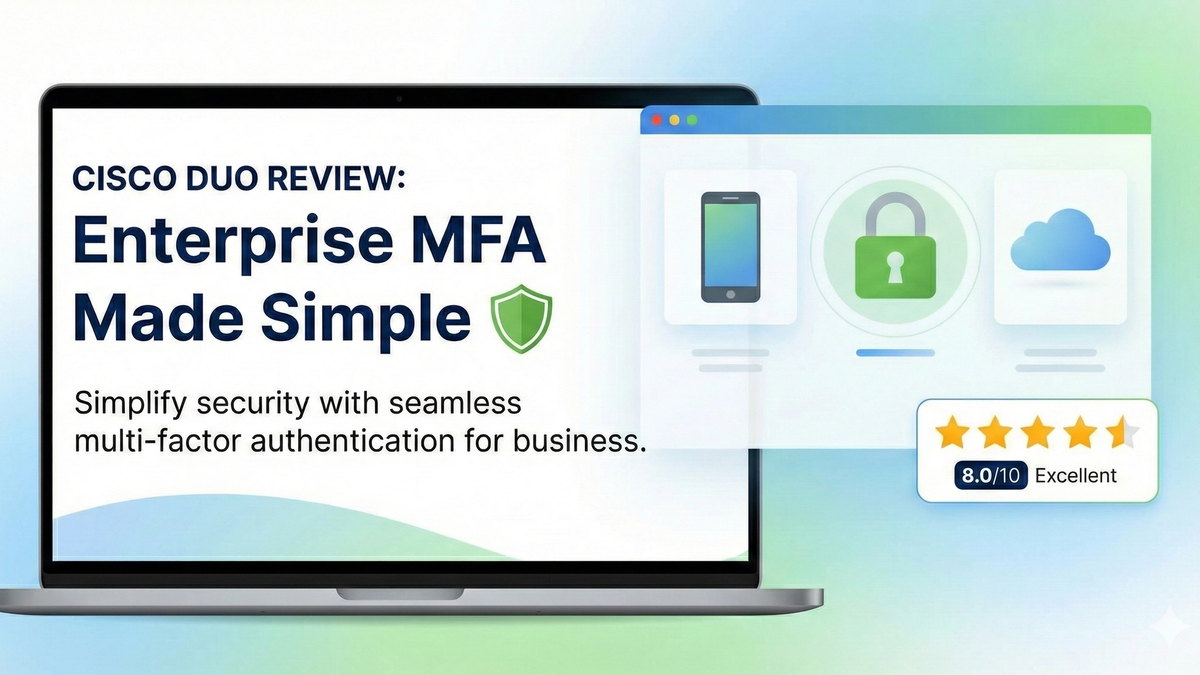
Cisco Duo Review: Enterprise MFA Made Simple
Cisco Duo delivers robust multi-factor authentication with one of the smoothest user experiences in the enterprise MFA space. While pricing can escalate quickly for larger teams, its device trust and adaptive policies make it a solid choice for security-conscious organizations.