
Understanding Board of Directors Powers and Responsibilities at Public Companies
When you invest in a publicly traded company, you're placing your trust—and your money—in the hands of a small group of individuals who wield enormous influence over that organization's future. T...
Introduction
When you invest in a publicly traded company, you're placing your trust—and your money—in the hands of a small group of individuals who wield enormous influence over that organization's future. This group is the board of directors, and understanding their powers and responsibilities is essential for investors, aspiring business leaders, and anyone interested in corporate governance.
The board of directors serves as the critical link between shareholders who own the company and executives who run it daily. They're neither passive observers nor hands-on managers, but something in between—strategic overseers with legal obligations and significant authority. Yet despite their importance, boards often operate behind closed doors, making their actual functions mysterious to outsiders.
This article demystifies the board of directors at public companies. Whether you're a shareholder trying to evaluate governance quality, a professional considering board service, or simply curious about how major corporations are actually controlled, you'll gain a comprehensive understanding of what boards do, how they operate, and why their effectiveness matters enormously.
The stakes couldn't be higher. Strong boards help companies navigate crises, pursue innovation, and create sustainable value. Weak boards enable executive misconduct, strategic drift, and sometimes spectacular corporate failures. By understanding board powers and responsibilities, you'll be better equipped to evaluate companies, anticipate governance issues, and appreciate the complex dynamics that shape corporate behavior.
Core Concepts
What Is a Board of Directors?
A board of directors is a group of individuals elected by shareholders to oversee a corporation's management and protect shareholder interests. At public companies, boards typically consist of 7-12 members who meet regularly (usually quarterly or monthly) to review performance, approve major decisions, and provide strategic guidance.
Board members are called "directors," and they serve fixed terms (commonly one to three years) before standing for re-election. The board elects a chairperson from among its members, and this role may be separate from or combined with the CEO position—a distinction that significantly impacts governance dynamics.
Fiduciary Duties: The Foundation of Board Responsibility
Directors owe two fundamental fiduciary duties to the corporation and its shareholders:
**Duty of Care**: Directors must make informed decisions by reviewing relevant information, asking critical questions, and exercising reasonable diligence. This doesn't require perfection, but it does demand thoughtful engagement with company affairs. Directors who simply rubber-stamp management proposals or fail to read materials before meetings violate this duty.
**Duty of Loyalty**: Directors must prioritize the corporation's interests above their personal interests. This means avoiding conflicts of interest, not usurping corporate opportunities for personal gain, and maintaining confidentiality. When conflicts are unavoidable, directors must disclose them and typically recuse themselves from related decisions.
These duties create legal obligations enforceable through shareholder lawsuits. The "business judgment rule" provides some protection, presuming that directors who make informed, good-faith decisions won't be held liable for poor outcomes—but this protection evaporates when directors are negligent or self-dealing.
Board Composition and Director Types
Public company boards typically include three categories of directors:
**Inside Directors**: These are company executives, most commonly the CEO. Their presence provides operational expertise and management perspective, but too many insiders can compromise board independence.
**Outside Directors**: Independent individuals without employment or significant business relationships with the company. They bring objectivity, diverse expertise, and accountability. Regulators and best practices strongly favor board majorities consisting of outside directors.
**Affiliated Directors**: Individuals with some connection to the company (former executives, major suppliers, family members of management) who aren't fully independent. Their presence raises potential conflict-of-interest concerns.
The trend in corporate governance strongly favors independent outside directors, with many companies now maintaining boards that are 80-90% independent.
Key Board Committees
To manage their workload effectively, boards delegate specific responsibilities to specialized committees:
**Audit Committee**: Reviews financial statements, oversees internal controls, and supervises the relationship with external auditors. SEC rules require public companies to have an audit committee composed entirely of independent directors, with at least one "financial expert."
**Compensation Committee**: Sets executive pay, designs incentive programs, and evaluates CEO performance. Independent compensation committees help prevent executives from essentially setting their own salaries.
**Nominating/Governance Committee**: Identifies board candidates, evaluates director performance, and develops governance policies. This committee shapes board composition and effectiveness over time.
**Risk Committee**: Increasingly common at large companies, this committee identifies strategic, operational, and compliance risks and ensures appropriate mitigation strategies exist.
How It Works
The Strategic Oversight Function
The board's primary responsibility is strategic oversight—not strategy creation. While management develops strategic plans, the board reviews, challenges, and ultimately approves them. Effective boards ask tough questions: Are growth assumptions realistic? Does the strategy address competitive threats? Are capital allocation priorities appropriate?
This oversight role requires boards to understand industry dynamics, competitive positioning, and emerging trends without micromanaging daily operations. The distinction is subtle but crucial: boards set direction and boundaries while management executes within those parameters.
CEO Selection, Evaluation, and Succession Planning
Perhaps no board responsibility carries greater impact than choosing the CEO. This decision shapes company culture, strategic direction, and ultimately performance. Boards must:
Boards must also regularly evaluate CEO performance against agreed-upon objectives, providing candid feedback and making difficult retention decisions when performance falters. This relationship—simultaneously collaborative and supervisory—requires sophisticated interpersonal dynamics.
Succession planning extends beyond the CEO to other critical executives. Effective boards maintain knowledge of high-potential leaders several levels down, ensuring the company can weather unexpected leadership departures.
Financial Oversight and Capital Allocation
Boards approve major financial decisions including:
The audit committee plays a specialized role here, meeting regularly with both internal and external auditors to discuss accounting policies, internal controls, and any concerns about financial reporting integrity.
Directors aren't expected to catch accounting fraud themselves, but they must create systems and cultures that prevent it and ask probing questions when results seem inconsistent with business realities.
Risk Management and Compliance
Modern boards dedicate substantial attention to risk oversight across multiple dimensions:
**Operational risks**: Supply chain disruptions, production failures, quality issues
**Financial risks**: Credit exposure, liquidity concerns, market volatility
**Strategic risks**: Technological disruption, competitive threats, market shifts
**Compliance risks**: Regulatory violations, legal liabilities, ethical breaches
**Reputational risks**: Public relations crises, social media backlash, environmental incidents
Effective boards don't attempt to eliminate all risk—that would paralyze the business—but ensure management identifies, quantifies, and appropriately manages risks relative to potential rewards.
Stakeholder Engagement
While boards legally represent shareholders, they increasingly engage with broader stakeholder groups:
This stakeholder-centric approach reflects both evolving societal expectations and recognition that long-term shareholder value depends on maintaining positive relationships with all constituencies.
Meeting Dynamics and Information Flow
Public company boards typically meet 6-12 times annually, with meetings lasting 4-8 hours. Between meetings, directors receive detailed board books—often hundreds of pages—containing financial reports, strategic updates, and materials for upcoming decisions.
Effective boards establish information flows that keep directors informed without overwhelming them. This includes:
The board's relationship with management is inherently complex: directors must be supportive enough that executives share problems candidly, yet challenging enough to provide genuine oversight. This balance requires trust, respect, and clear communication norms.
Real-World Examples
Example 1: Apple's Board and CEO Succession
Apple's board faced one of the most challenging succession situations in corporate history when Steve Jobs's health deteriorated. The board's handling of this situation offers valuable lessons:
**What they did right**: The board had worked with Jobs on succession planning for years, identifying and developing Tim Cook as COO with expanding responsibilities. When Jobs took medical leave, the transition was relatively smooth because groundwork had been laid.
**Governance controversy**: The board faced criticism for initially not disclosing the full extent of Jobs's health issues, raising questions about when personal medical information becomes material to investors. This highlights the tension boards
Related Reviews

REOLINK 4K Security Camera System Review: Professional PoE Surveillance at DIY Prices
The REOLINK 4K PoE security system delivers 8MP clarity, smart person/vehicle detection, 24/7 recording with 4TB storage, and plug-and-play installation for comprehensive home surveillance.
Ring Outdoor Cam Pro Review: 4K Security Camera with Radar-Powered Motion Detection
The Ring Outdoor Cam Pro delivers Retinal 4K video, 10x enhanced zoom, Low-Light Sight for true color night vision, and radar-powered 3D motion detection for precise security alerts.
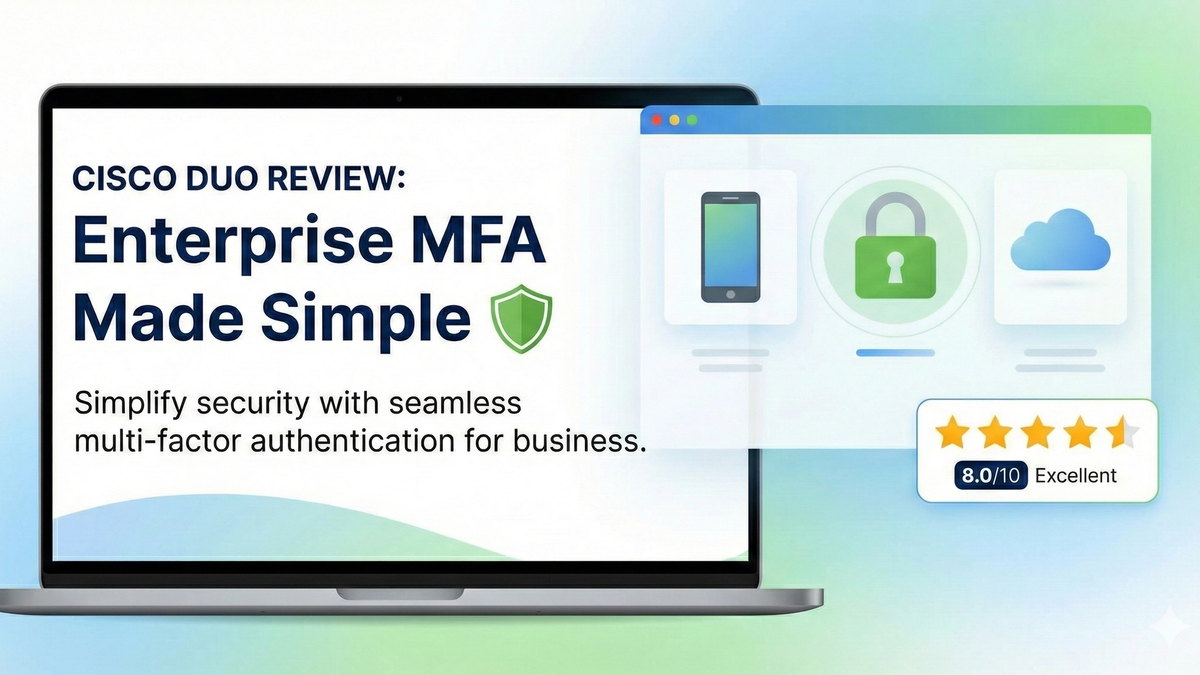
Cisco Duo Review: Enterprise MFA Made Simple
Cisco Duo delivers robust multi-factor authentication with one of the smoothest user experiences in the enterprise MFA space. While pricing can escalate quickly for larger teams, its device trust and adaptive policies make it a solid choice for security-conscious organizations.