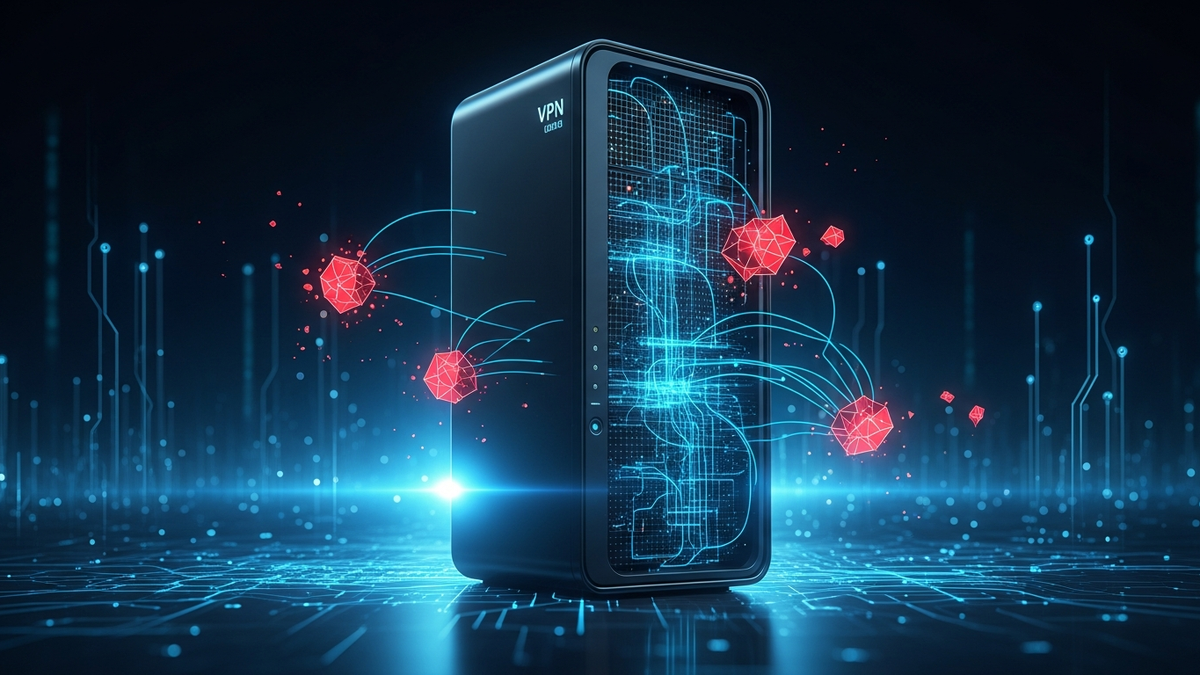
What Are VPN Appliance Vulnerabilities and Why They Matter
Virtual Private Network (VPN) appliances have become critical infrastructure components for organizations worldwide, serving as the primary gateway for remote access to corporate networks. These ...
Introduction
Virtual Private Network (VPN) appliances have become critical infrastructure components for organizations worldwide, serving as the primary gateway for remote access to corporate networks. These hardware or software-based devices create encrypted tunnels between remote users and internal networks, ostensibly protecting sensitive data from interception and unauthorized access. However, the very centrality of VPN appliances in network architecture has made them high-value targets for sophisticated threat actors.
The security paradox of VPN appliances is stark: devices designed explicitly to provide secure access have repeatedly proven to be among the most vulnerable entry points into enterprise networks. Between 2019 and 2024, critical vulnerabilities in VPN appliances manufactured by major vendors—including Pulse Secure, Fortinet, Palo Alto Networks, and Cisco—have been exploited in widespread campaigns affecting thousands of organizations globally. These incidents have resulted in data breaches, ransomware deployments, espionage operations, and complete network compromises.
Unlike typical endpoint vulnerabilities that might affect individual workstations, VPN appliance compromises have catastrophic potential. A single exploited vulnerabilityVulnerability🛡️A weakness in software, hardware, or processes that can be exploited by attackers to gain unauthorized access or cause harm. can provide attackers with a persistent foothold at the network perimeter, access to authentication credentials for hundreds or thousands of users, and the ability to intercept or manipulate all traffic flowing through the device. State-sponsored advanced persistent threat (APT) groups have demonstrated particular interest in VPN vulnerabilities, with agencies including CISA, FBI, and NSA issuing repeated warnings about active exploitation campaigns.
This article provides a comprehensive examination of VPN appliance vulnerabilities from both offensive and defensive perspectives. We'll explore the technical architecture that creates these vulnerabilities, analyze real-world exploitation campaigns with specific CVE references, and provide actionable guidance for detection, prevention, and response. Whether you're a security architect designing perimeter defenses, a penetration tester evaluating organizational security, or an incident responder investigating potential compromises, understanding VPN appliance vulnerabilities is essential to contemporary cybersecurity practice.
Core Concepts
VPN Appliance Architecture
VPN appliances operate at the intersection of network infrastructure, cryptographic systems, and identity management—each layer presenting distinct attack surfaces. Modern enterprise VPN solutions typically implement either SSL/TLSSSL/TLS🛡️Cryptographic protocols that secure data transmitted between your browser and websites (the lock icon in HTTPS).-based protocols (like SSL VPN) or IPsec, with many appliances supporting both. The appliance itself runs a specialized operating system (often Linux-based with proprietaryProprietary📖Software owned by a company with restricted access to source code. modifications) that handles connection establishment, user authentication, traffic encryptionEncryption🛡️The process of converting data into a coded format that can only be read with the correct decryption key./decryption, and policy enforcement.
The authentication subsystem represents one of the most critical components. VPN appliances integrate with various identity providers including Active Directory, LDAP directories, RADIUS servers, and increasingly, SAML-based single sign-on (SSO) systems. This integration creates complex code paths that must securely handle untrusted input from unauthenticated clients while maintaining compatibility with diverse authentication backends.
The web-based administrative interface present in most VPN appliances constitutes another significant attack surface. These interfaces, typically exposed to the internet for administrative convenience, have historically suffered from authentication bypasses, command injectionCommand Injection🛡️A security vulnerability that allows attackers to execute arbitrary operating system commands on the host system through a vulnerable application. vulnerabilities, and directory traversal flaws. The convenience of web-based management creates an inherent tension between usability and security.
Common Vulnerability Classes
**Pre-Authentication Vulnerabilities**: These represent the most severe category, allowing attackers to exploitExploit🛡️Code or technique that takes advantage of a vulnerability to cause unintended behavior, such as gaining unauthorized access. the VPN appliance without valid credentials. Path traversal vulnerabilities (like CVE-2019-11510 in Pulse Secure) enable arbitrary file access, often exposing plaintext credentials or session tokens. Authentication bypassAuthentication Bypass📖A security vulnerability that allows an attacker to circumvent the login verification process and gain unauthorized access to a system without providing valid credentials. flaws allow complete circumvention of access controls, granting immediate administrative access.
**Post-Authentication Vulnerabilities**: While requiring valid credentials, these vulnerabilities allow privilege escalationPrivilege Escalation🛡️An attack technique where an adversary gains elevated access rights beyond what was initially granted. or lateral movementLateral Movement🛡️Techniques attackers use to move through a network after initial compromise, seeking additional systems to control and data to steal. capabilities beyond what the compromised account should permit. Command injection flaws in administrative interfaces can provide root-level code execution on the underlying appliance operating system.
**Cryptographic Weaknesses**: Some vulnerabilities stem from implementation flaws in cryptographic protocols rather than traditional software bugs. Use of weak cipher suites, improper certificate validation, or flawed random number generation can undermine the fundamental security guarantees VPNs are designed to provide.
**Supply Chain and Backdoor Concerns**: VPN appliances occasionally ship with undocumented administrative accounts, debugging interfaces left active in production firmwareFirmware🏠Permanent software programmed into a device's hardware that controls its basic functions., or intentional backdoors. The Juniper ScreenOS backdoor (discovered in 2015) demonstrated that even established vendors might ship products with authentication bypass mechanisms, whether introduced maliciously or through supply chain compromise.
The Exploitation Lifecycle
VPN appliance exploitation typically follows a predictable pattern. Initial reconnaissance involves identifying the specific vendor and firmware version, often through distinctive HTTP headers, SSL certificate patterns, or unique web interface characteristics. Shodan, Censys, and similar internet-scanning platforms enable mass identification of vulnerable devices.
Once identified, attackers leverage public exploits or custom tools to achieve initial access. Pre-authentication vulnerabilities are exploited first to extract configuration files, authentication databases, or session tokens. These artifacts often contain encrypted passwords that, once recovered, provide legitimate-appearing access credentials.
Post-exploitation activities focus on establishing persistence and expanding access. Attackers commonly modify system files to create backdoors, extract additional credentials from memory or configuration files, and use the VPN appliance as a pivot point to access internal network resources. Because VPN connections from these devices appear legitimate, malicious traffic often bypasses security controls designed to detect external threats.
How It Works
Technical Architecture and Attack Surface
To understand VPN appliance vulnerabilities, we must examine the technical architecture in detail. A typical enterprise VPN appliance consists of several interconnected components:
┌─────────────────────────────────────────────────────┐
│              VPN Appliance Components                │
├─────────────────────────────────────────────────────┤
│  Web Management Interface (HTTPS, Port 443/8443)    │
│  ├─── Authentication Handler                        │
│  ├─── Administrative Functions                      │
│  └─── API Endpoints                                 │
├─────────────────────────────────────────────────────┤
│  VPN Gateway Service (SSL/TLS or IPsec)             │
│  ├─── Connection Establishment                      │
│  ├─── User Authentication                           │
│  └─── Traffic Encryption/Decryption                 │
├─────────────────────────────────────────────────────┤
│  Authentication Backend Integration                 │
│  ├─── LDAP/Active Directory Connectors              │
│  ├─── RADIUS Client                                 │
│  └─── SAML/OAuthOAuth🛡️An open standard authorization protocol that allows applications to access user resources without exposing passwords, using tokens instead of credentials. Handlers                           │
├─────────────────────────────────────────────────────┤
│  Operating System (Custom Linux/BSD)                │
│  ├─── Web Server (Apache/nginx/custom)              │
│  ├─── Database (SQLite/PostgreSQL/proprietary)      │
│  └─── System Services                               │
└─────────────────────────────────────────────────────┘
Each layer presents opportunities for exploitation. Let's examine specific vulnerability mechanics:
Path Traversal and Arbitrary File Read
The Pulse Secure CVE-2019-11510 vulnerability demonstrates classic path traversal exploitation. The web interface failed to properly sanitize URL paths, allowing directory traversal sequences to access arbitrary files on the system:
# Exploit request structure for CVE-2019-11510
curl -k "https://vulnerable-vpn.target.com/dana-na/../dana/html5acc/guacamole/../../../../../../etc/passwd?/dana/html5acc/guacamole/"

# More targeted request to extract session cache
curl -k "https://vulnerable-vpn.target.com/dana-na/../dana/html5acc/guacamole/../../../../../../data/runtime/mtmp/lmdb/dataa/data.mdb?/dana/html5acc/guacamole/"
This vulnerability enabled attackers to read sensitive files including:
The extracted session tokens could be injected into browser cookies to hijack active VPN sessions without knowing user passwords:
Related Reviews

REOLINK 4K Security Camera System Review: Professional PoE Surveillance at DIY Prices
The REOLINK 4K PoE security system delivers 8MP clarity, smart person/vehicle detection, 24/7 recording with 4TB storage, and plug-and-play installation for comprehensive home surveillance.
Ring Outdoor Cam Pro Review: 4K Security Camera with Radar-Powered Motion Detection
The Ring Outdoor Cam Pro delivers Retinal 4K video, 10x enhanced zoom, Low-Light Sight for true color night vision, and radar-powered 3D motion detection for precise security alerts.
Cisco Duo Review: Enterprise MFA Made Simple
Cisco Duo delivers robust multi-factor authentication with one of the smoothest user experiences in the enterprise MFA space. While pricing can escalate quickly for larger teams, its device trust and adaptive policies make it a solid choice for security-conscious organizations.