
What is Threat Intelligence and Why It Matters for Your Organization
In today's hyper-connected digital landscape, organizations face an unprecedented volume and sophistication of cyber threats. Every day, businesses of all sizes contend with ransomware attacks, d...
Introduction
In today's hyper-connected digital landscape, organizations face an unprecedented volume and sophistication of cyber threats. Every day, businesses of all sizes contend with ransomware attacks, data breaches, phishingPhishing🛡️A social engineering attack using fake emails or websites to steal login credentials or personal info. campaigns, and advanced persistent threats that can cripple operations and destroy reputations overnight. The question is no longer whether your organization will be targeted, but when—and whether you'll be prepared.
This is where threat intelligence becomes indispensable. Unlike traditional reactive security measures that simply respond to attacks after they occur, threat intelligence enables organizations to anticipate, identify, and neutralize threats before they cause significant damage. It transforms cybersecurity from a defensive stance into a proactive strategy, allowing security teams to understand not just the "what" of cyber threats, but the critical "who," "why," "when," and "how."
For technology leaders, security professionals, and business executives, understanding threat intelligence isn't just a technical consideration—it's a business imperative. Organizations that effectively leverage threat intelligence reduce their risk exposure, minimize incident response times, optimize security investments, and maintain the trust of customers and stakeholders.
This comprehensive guide will demystify threat intelligence, exploring its fundamental concepts, operational mechanics, real-world applications, and practical implementation strategies. Whether you're building a security program from the ground up or enhancing existing capabilities, you'll gain actionable insights to strengthen your organization's security posture.
Core Concepts
Defining Threat Intelligence
Threat intelligence is evidence-based knowledge about existing or emerging threats to an organization's assets. It goes far beyond raw data or simple threat feeds. True threat intelligence is information that has been collected, processed, analyzed, and refined to provide actionable insights that inform security decisions.
The key distinction is actionability. Raw security data—such as IP addresses, file hashes, or domain names associated with malicious activity—becomes intelligence only when analyzed within the context of your organization's specific environment, vulnerabilities, and business objectives. This contextualization transforms generic information into specific, actionable recommendations that security teams can act upon.
The Four Types of Threat Intelligence
Understanding the different categories of threat intelligence helps organizations deploy the right resources at the right levels:
**Strategic Threat Intelligence** operates at the executive level, providing high-level insights about the threat landscape, threat actor motivations, and emerging trends. This non-technical intelligence informs business decisions, risk assessments, and security strategy. For example, strategic intelligence might reveal that your industry is experiencing increased targeting by ransomware groups, prompting leadership to allocate additional budget to backup systems and incident response capabilities.
**Tactical Threat Intelligence** focuses on the tactics, techniques, and procedures (TTPs) that threat actors employ. This intelligence helps security teams understand the "how" of attacks, enabling them to recognize attack patterns and adjust defenses accordingly. Tactical intelligence is particularly valuable for threat hunting teams and security operations centers (SOCs) that need to detect sophisticated attacks that evade automated defenses.
**Operational Threat Intelligence** provides insights about specific, imminent attacks. This includes information about threat actor campaigns, their targets, timing, and nature. Operational intelligence enables organizations to take immediate defensive actions against known threats. For instance, learning that a particular threat group is actively targeting organizations in your sector with a specific vulnerabilityVulnerability🛡️A weakness in software, hardware, or processes that can be exploited by attackers to gain unauthorized access or cause harm. exploitation campaign allows you to prioritize patching efforts.
**Technical Threat Intelligence** consists of specific indicators of compromise (IOCs) such as malicious IP addresses, domains, URLs, file hashes, and email addresses. This is the most tactical and granular form of threat intelligence, often consumed directly by security tools like firewalls, intrusion detection systems, and endpoint protection platforms to block known threats automatically.
The Threat Intelligence Lifecycle
Effective threat intelligence follows a continuous cycle that ensures relevance and actionability:
The **planning and direction** phase establishes intelligence requirements based on organizational needs, identifying what threats matterMatter🏠A new universal smart home standard backed by Apple, Google, and Amazon for cross-platform compatibility. most to your specific business context.
**Collection** involves gathering raw data from multiple sources—both internal (security logs, incident reports) and external (threat feeds, industry sharing groups, open-source intelligence).
**Processing** transforms raw data into a usable format, normalizing, deduplicating, and organizing information for analysis.
**Analysis** is where data becomes intelligence, as analysts apply expertise to identify patterns, assess credibility, determine relevance, and develop actionable insights.
**Dissemination** delivers intelligence to stakeholders in appropriate formats—technical teams receive detailed IOCs while executives receive strategic summaries.
**Feedback** closes the loop, evaluating intelligence effectiveness and refining requirements to improve future cycles.
How It Works
Intelligence Sources and Collection
The foundation of effective threat intelligence is diverse, high-quality information sources. Organizations typically leverage a combination of:
**Internal Sources** provide the most contextually relevant intelligence. Security information and event management (SIEM) systems, endpoint detection logs, network traffic analysis, and incident response findings reveal how threats specifically target your environment. Historical data about past incidents contains invaluable patterns that inform future defenses.
**Open-Source Intelligence (OSINT)** encompasses publicly available information from security blogs, vulnerability databases, social media, forums, paste sites, and research publications. While freely available, OSINT requires significant expertise to collect, validate, and contextualize effectively.
**Commercial Threat Feeds** offer curated, high-confidence intelligence from specialized vendors who maintain extensive collection infrastructure and analytical capabilities. These subscriptions provide structured, machine-readable threat data that integrates directly into security tools.
**Information Sharing Communities** enable trusted peer-to-peer intelligence exchange. Industry-specific Information Sharing and Analysis Centers (ISACs) allow organizations in sectors like finance, healthcare, and energy to share threat information while maintaining confidentiality. Government partnerships, such as the FBI's InfraGard program, provide additional intelligence channels.
**Dark Web Monitoring** tracks underground forums, marketplaces, and communication channels where threat actors trade stolen credentials, plan attacks, and sell exploits. This intelligence provides early warning of targeted campaigns and emerging threats.
Analysis and Contextualization
Raw threat data only becomes actionable through rigorous analysis. Skilled analysts evaluate information across multiple dimensions:
**Relevance Assessment** determines whether a threat actually applies to your organization's specific technology stack, industry, geographic location, and business model. A vulnerability in an application you don't use presents no immediate risk, regardless of its severity in general terms.
**Credibility Evaluation** examines the reliability of intelligence sources and the confidence level of specific reports. Not all threat intelligence is created equal—analysts must distinguish high-confidence, verified information from speculation and misinformation.
**Pattern Recognition** identifies relationships between seemingly disparate data points, revealing broader campaigns, threat actor behaviors, and attack methodologies. Advanced analysts use frameworks like MITRE ATT&CK to map observed techniques to known threat actor profiles.
**Priority Assignment** ensures limited security resources focus on the most critical threats. Analysts consider factors like exploitability, potential impact, affected assets, and likelihood of exploitation to create prioritized response recommendations.
Integration and Automation
Modern threat intelligence platforms automatically ingest intelligence from multiple sources, enrich it with contextual data, and distribute it to security tools throughout the environment. This automation dramatically accelerates response times—what once took hours of manual research can now occur in seconds.
Security orchestration, automation, and response (SOAR) platforms take this further by automatically executing defensive actions based on threat intelligence. When a new malicious IP addressIP Address🔐A unique numerical identifier assigned to every device connected to the internet. is identified, SOAR systems can automatically update firewallFirewall🌐Security system that monitors and controls network traffic based on predetermined rules. rules, quarantine affected systems, and initiate investigation workflows—all without human intervention.
Real-World Examples
Example 1: Preventing a Targeted Ransomware Attack
A mid-sized manufacturing company subscribed to a threat intelligence service that provided industry-specific insights. One morning, the security team received an alert that a ransomware group known for targeting manufacturing firms had launched a new campaign exploiting a recently disclosed vulnerability in a widely used remote access tool.
The intelligence report included specific IOCs, the vulnerability being exploited (CVE number), and detailed tactics the threat actors employed. The security team immediately checked their environment and discovered they used the vulnerable software. Within hours, they applied emergency patches, blocked the malicious IP addresses at their perimeter, and implemented additional monitoring for the specific attack signatures described in the intelligence.
Three days later, their SIEM detected and automatically blocked an intrusion attempt matching the exact attack pattern described in the threat intelligence. Without that forewarning and preparation, the attack likely would have succeeded, potentially costing the company millions in ransom, recovery costs, and operational downtime.
Example 2: Credential Stuffing Defense Through Dark Web Intelligence
A retail organization's threat intelligence program included dark web monitoring services. The service alerted them that a large database containing customer credentials from a completely different company's breach had appeared on an underground forum.
Recognizing that many consumers reuse passwords across sites, the security team anticipated credential stuffing attacks—where attackers use stolen credentials from one breach to access accounts on other platforms. They proactively implemented enhanced authentication monitoring, deployed behavioral analytics to detect unusual login patterns, and prepared customer communications about password security.
When the anticipated credential stuffing attack occurred days later, their defenses automatically detected and blocked the attempts. More importantly, they used the incident to engage customers with education about password hygiene and multi-factor authentication, actually strengthening security
Related Reviews
REOLINK 4K Security Camera System Review: Professional PoE Surveillance at DIY Prices
The REOLINK 4K PoE security system delivers 8MP clarity, smart person/vehicle detection, 24/7 recording with 4TB storage, and plug-and-play installation for comprehensive home surveillance.
Ring Outdoor Cam Pro Review: 4K Security Camera with Radar-Powered Motion Detection
The Ring Outdoor Cam Pro delivers Retinal 4K video, 10x enhanced zoom, Low-Light Sight for true color night vision, and radar-powered 3D motion detection for precise security alerts.
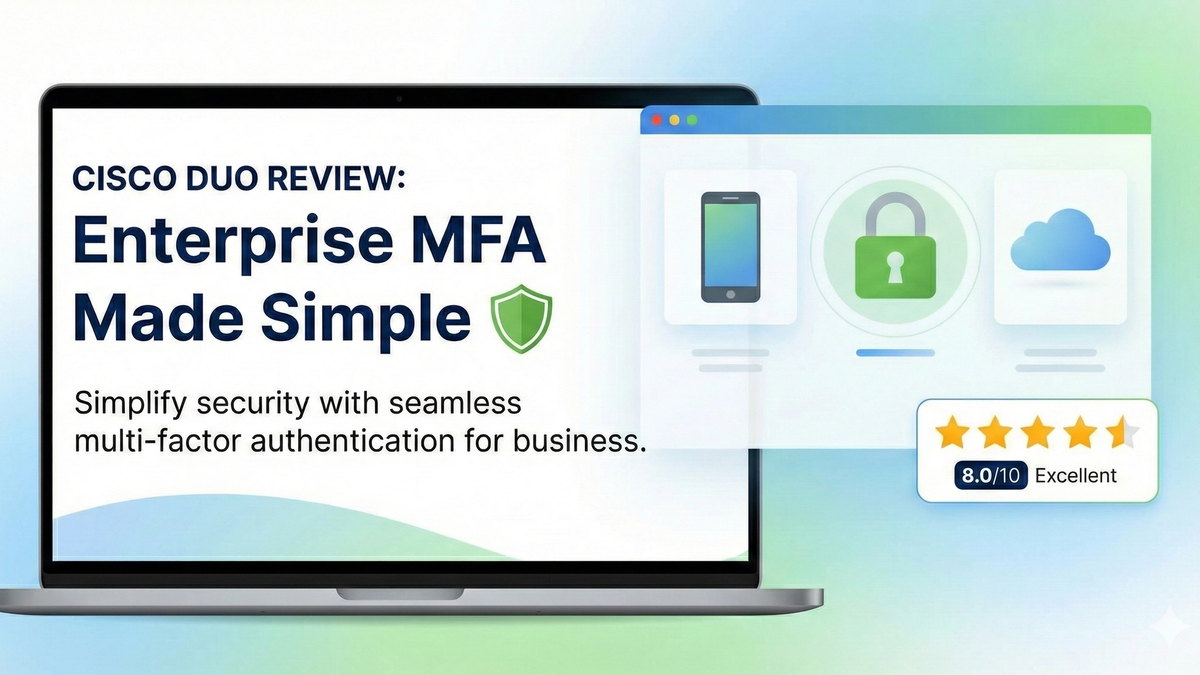
Cisco Duo Review: Enterprise MFA Made Simple
Cisco Duo delivers robust multi-factor authentication with one of the smoothest user experiences in the enterprise MFA space. While pricing can escalate quickly for larger teams, its device trust and adaptive policies make it a solid choice for security-conscious organizations.