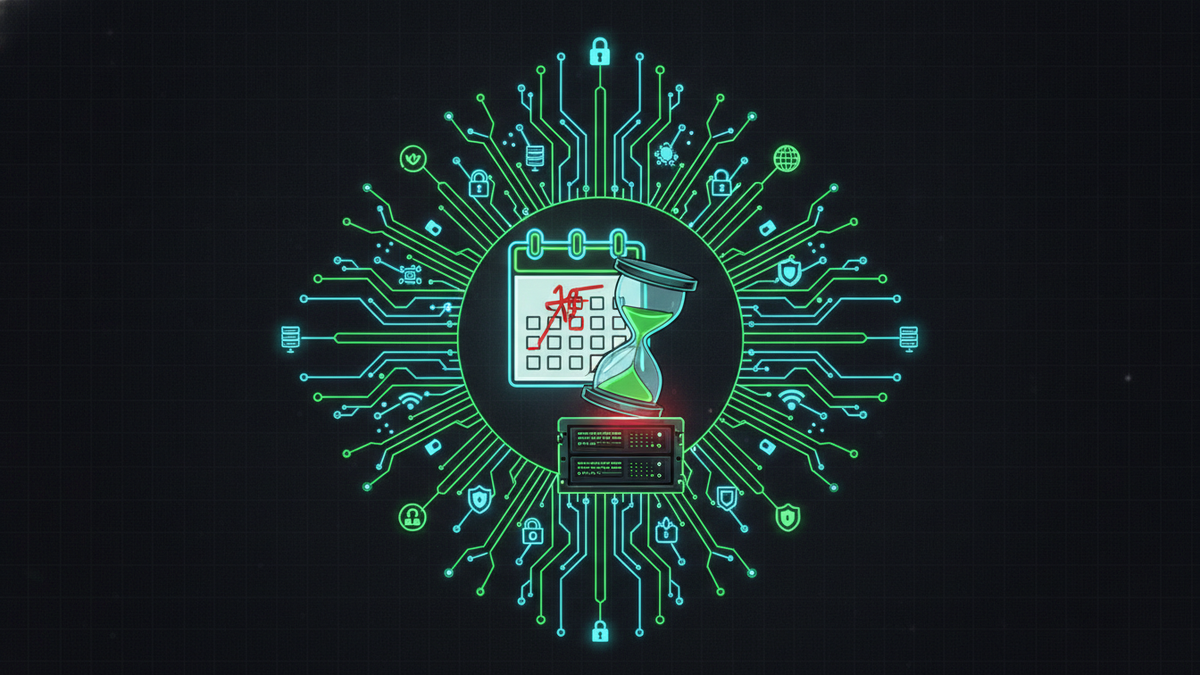
Why End-of-Life Software Is a Standing Breach Risk
Unsupported software does not fail on its retirement date. It keeps running, keeps holding data, and quietly becomes the easiest way into your network. Here is how to plan for it.
End-of-life software is dangerous precisely because nothing dramatic happens when it reaches end of life. The server keeps serving. Users keep logging in. The data keeps sitting there. What changes is invisible: the vendor stops shipping security fixes, so every vulnerabilityVulnerability🛡️A weakness in software, hardware, or processes that can be exploited by attackers to gain unauthorized access or cause harm. discovered from that day forward is permanent. Over months and years those unfixable flaws accumulate, and a system that looked stable becomes the softest target on your network.
The Risk Grows While Nothing Visibly Changes
A supported product and an unsupported one can look identical in production. The difference only surfaces when a new vulnerability is disclosed. For the supported product, a patchPatch🛡️A software update that fixes security vulnerabilities, bugs, or adds improvements to an existing program. arrives and you apply it. For the end-of-life product, there is no patch, ever. The exposure is now a fixed property of running that software, and it compounds with each new finding. Compensating controls can slow an attacker, but they never restore the ability to actually fix the underlying flaw.
Attackers understand this asymmetry and prioritize accordingly. Legacy, internet-facing services are attractive because they combine known weaknesses with low odds of active maintenance. The ownCloud intrusion covered in ownCloud Auth Bypass CVE-2023-49105 Added to CISA KEVCISA KEV🛡️The Known Exploited Vulnerabilities catalog maintained by CISA, listing vulnerabilities actively exploited in attacks that federal agencies must patch by specific deadlines. After Nuclear-Data Theft is a clean example: a nearly two-year-old authentication bypassAuthentication Bypass📖A security vulnerability that allows an attacker to circumvent the login verification process and gain unauthorized access to a system without providing valid credentials. in an aging self-hosted product was weaponized against critical research infrastructure long after the vendor had moved customers toward a newer platform. The bug did not get more severe with age — the deployments simply stopped being maintained around it, and no one retired them.
Find It Before You Can Plan For It
You cannot manage a lifecycle you cannot see. Effective end-of-life planning starts from an accurate inventory that records not just what software you run but its support status and its exposure. Any internet-facing system deserves the closest scrutiny, which is why lifecycle tracking and the exposure review in How to Audit Internet-Exposed File-Sharing Servers reinforce each other: the first tells you what is out of support, the second tells you which of those the whole internet can reach.
For each unsupported system, capture what it does, what data it holds, who depends on it, and what it would take to replace or isolate it. That inventory turns a vague sense of technical debt into a ranked list you can act on, with the highest-exposure, highest-value systems at the top. Attaching a rough cost and a business owner to each entry is what moves the conversation out of the security team and into the budget where migration decisions actually get made.
Build a Migration and Containment Plan
Some end-of-life systems can be retired outright once their function moves elsewhere. Others cannot be removed on a convenient timeline because a business process still depends on them. Both outcomes need a plan. For systems you will replace, set a migration date and treat it as a commitment, not an aspiration, because "we will upgrade eventually" is how a product reaches end of life while still in production and stays there for years.
For systems you cannot yet remove, contain them. Pull them off the public internet, put them behind a VPN or a strict IP allowlist, segment them away from sensitive assets, and increase monitoring on what remains. These compensating controls do not fix the underlying flaws, but they shrink the attack surfaceAttack Surface🛡️The sum of all points where an unauthorized user could attempt to enter or extract data from a system: exposed services, interfaces, accounts, and integrations. Reducing attack surface means removing reachability, not just patching. and buy time. When a new exploitExploit🛡️Code or technique that takes advantage of a vulnerability to cause unintended behavior, such as gaining unauthorized access. does land, a structured response such as How to Triage a CISA KEV Addition in 72 Hours keeps the clock manageable. The organizations that weather old-CVE campaigns are not the ones that never run legacy software — they are the ones that know exactly which legacy systems they run and have already decided what to do when one becomes a headline.
Related Reviews

REOLINK 4K Security Camera System Review: Professional PoE Surveillance at DIY Prices
The REOLINK 4K PoE security system delivers 8MP clarity, smart person/vehicle detection, 24/7 recording with 4TB storage, and plug-and-play installation for comprehensive home surveillance.
Ring Outdoor Cam Pro Review: 4K Security Camera with Radar-Powered Motion Detection
The Ring Outdoor Cam Pro delivers Retinal 4K video, 10x enhanced zoom, Low-Light Sight for true color night vision, and radar-powered 3D motion detection for precise security alerts.
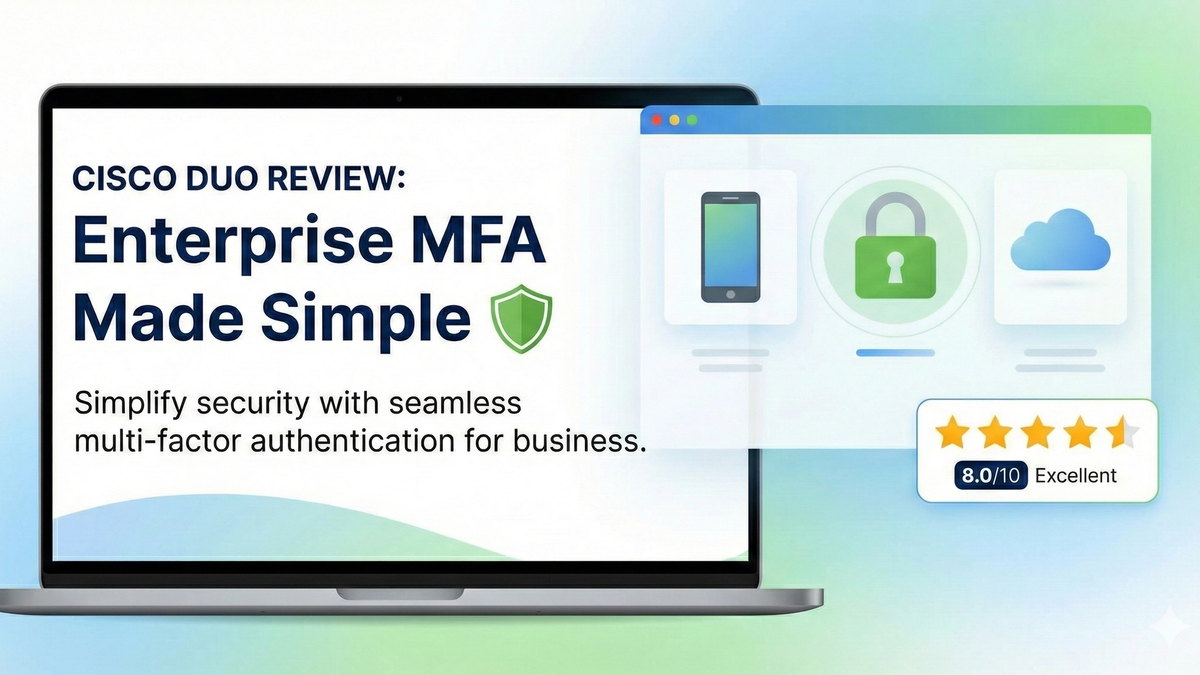
Cisco Duo Review: Enterprise MFA Made Simple
Cisco Duo delivers robust multi-factor authentication with one of the smoothest user experiences in the enterprise MFA space. While pricing can escalate quickly for larger teams, its device trust and adaptive policies make it a solid choice for security-conscious organizations.