How Companies Assess and Report the Scope of Cybersecurity Incidents
When a cybersecurity incident strikes an organization, the clock immediately starts ticking. What follows is a critical period where companies must rapidly determine what happened, how extensive ...
Introduction
When a cybersecurity incident strikes an organization, the clock immediately starts ticking. What follows is a critical period where companies must rapidly determine what happened, how extensive the damage is, and who needs to be informed. The process of assessing and reporting cybersecurity incidents has evolved from an ad-hoc reactive measure into a structured, regulated practice that can determine a company's survival, legal liability, and reputation.
In recent years, high-profile breaches have demonstrated that mishandling incident scope assessment can be just as damaging as the breach itself. Companies that underestimate the scope may fail to protect affected parties, while those that overestimate may trigger unnecessary panic and regulatory scrutiny. The challenge lies in conducting a thorough, accurate assessment under time pressure while simultaneously managing legal obligations, stakeholder communications, and remediation efforts.
This comprehensive guide explores how modern organizations approach cybersecurity incident assessment and reporting. Whether you're a security professional, business leader, or technology enthusiast, understanding this process is essential in today's interconnected digital landscape. We'll examine the frameworks companies use, the stakeholders they must consider, and the practical steps that turn chaos into controlled response.
The stakes have never been higher. With regulations like GDPR, CCPA, and SEC disclosure requirements imposing strict timelines and penalties, companies must balance speed with accuracy. This article will equip you with the knowledge to understand—and implement—effective incident assessment and reporting procedures.
Core Concepts
What Constitutes a Cybersecurity Incident
Before assessing scope, organizations must clearly define what qualifies as a cybersecurity incident. The National Institute of Standards and Technology (NIST) defines an incident as a violation or imminent threat of violation of computer security policies, acceptable use policies, or standard security practices.
This broad definition encompasses everything from successful phishingPhishing🛡️A social engineering attack using fake emails or websites to steal login credentials or personal info. attacks and malware infections to unauthorized access, data breaches, denial-of-service attacks, and insider threats. Not every security event rises to the level of an "incident"—a blocked intrusion attempt might be logged as an event but not trigger full incident response protocols.
The Incident Scope Triangle
Assessing incident scope involves examining three critical dimensions:
**Technical Scope**: What systems, networks, and data were affected? This includes identifying compromised servers, infected endpoints, accessed databases, and affected applications. Technical scope determines the breadth of your remediation efforts.
**Data Scope**: What information was accessed, exfiltrated, modified, or destroyed? This is perhaps the most critical dimension for regulatory compliance and stakeholder notification. Understanding whether personal information, financial data, intellectual property, or other sensitive information was involved drives many downstream decisions.
**Impact Scope**: Who is affected and how severely? This includes internal stakeholders (employees, executives, board members), external parties (customers, partners, suppliers), and broader constituencies (regulators, investors, the public). Impact scope determines your communication and reporting obligations.
Incident Classification and Severity
Most organizations use tiered classification systems to categorize incidents by severity. A common framework includes:
Severity classification influences response resources, escalation paths, and reporting requirements. A Severity 1 incident might require immediate C-suite notification and regulatory reporting, while a Severity 4 incident might be handled entirely within the security team.
The Incident Response Lifecycle
Incident assessment and reporting doesn't occur in isolation—it's integrated into the broader incident response lifecycle:
Scope assessment primarily occurs during detection and analysis but continues evolving through containment and eradication as investigators uncover additional evidence.
How It Works
Initial Detection and Triage
The incident assessment process typically begins when a security team receives an alert through automated systems, user reports, or external notifications. The first responders must quickly triage the situation to determine if a genuine incident has occurred and what immediate actions are necessary.
During triage, responders gather preliminary information: When was the incident detected? What systems appear affected? Are there signs of ongoing malicious activity? Is sensitive data at risk? These initial questions shape the immediate response and determine whether to escalate.
Organizations often use a "triage matrix" that maps indicators to appropriate response levels. For example, detection of known malware on a single non-critical workstation might trigger standard containment procedures, while evidence of unauthorized access to customer databases would immediately escalate to senior security leadership.
Assembling the Incident Response Team
Once an incident reaches a certain threshold, organizations activate their incident response team. This cross-functional group typically includes:
The team's composition may expand or contract based on incident severity and evolution. Critical incidents often involve external specialists such as forensic investigators, crisis communications firms, and cyber insurance representatives.
Technical Investigation and Evidence Collection
The technical investigation aims to answer fundamental questions: How did the attacker gain access? What actions did they take? What data or systems were affected? When did the incident begin?
Investigators employ various techniques:
**Log Analysis**: Examining system logs, network traffic, authentication records, and application logs to reconstruct the timeline of attacker activity. Modern SIEM (Security Information and Event Management) systems aggregate these logs for analysis.
**Forensic Imaging**: Creating bit-for-bit copies of affected systems to preserve evidence and enable detailed analysis without disrupting operations or contaminating evidence.
**Malware Analysis**: Reverse engineering malicious software to understand its capabilities, communication methods, and potential data exfiltrationData Exfiltration🛡️The unauthorized transfer of data from a computer or network, often performed by attackers before deploying ransomware to enable double extortion..
**Network Traffic Analysis**: Examining packet captures and flow data to identify malicious communications, data transfers, and compromised systems.
**Endpoint Investigation**: Analyzing compromised workstations or servers for indicators of compromise (IOCs), persistence mechanisms, and user activity.
This investigation must balance speed with thoroughness. Investigators work to quickly identify the scope while ensuring their findings will withstand regulatory scrutiny and potential legal proceedings.
Determining Data Impact
For many incidents, determining what data was affected represents the most challenging and consequential aspect of scope assessment. This requires understanding:
**Data Mapping**: What information resided on affected systems? Organizations with mature data governance can quickly reference inventories showing where sensitive data exists. Those without such mapping face a time-consuming discovery process.
**Access vs. Exfiltration**: Did attackers merely gain access to data, or was it actually stolen? Evidence of exfiltration might include unusual outbound network traffic, file compression/archiving activity, or communications with known attacker infrastructure.
**Data Types**: Was the information personal (names, addresses, Social Security numbers), financial (credit cards, bank accounts), health-related (protected health information), or business-sensitive (trade secrets, strategic plans)? Different data types trigger different regulatory obligations.
**Affected Population**: How many individuals' information was involved? Determining this often requires database queries, analysis of accessed files, and correlation with identity information.
Scope Expansion and Contraction
Initial scope assessments are rarely correct. As investigation continues, the understanding of what was affected typically expands as new evidence emerges. Analysts might discover:
Less commonly, scope contracts as investigation reveals that initial indicators were false positives or that suspected compromises didn't actually result in data access.
Organizations must maintain flexibility in their response plans to accommodate scope changes. This includes establishing processes for updating stakeholders when the understanding of impact changes significantly.
Documentation Throughout the Process
Comprehensive documentation serves multiple critical purposes during incident assessment:
**Decision Audit Trail**: Recording who made what decisions based on what information and when establishes accountability and helps defend choices if later questioned by regulators or legal proceedings.
**Evidence Preservation**: Proper documentation maintains the chain of custody for digital evidence that may be needed for legal action or compliance demonstrations.
**Timeline Reconstruction**: Detailed notes enable teams to piece together complex attack sequences
Related Reviews
REOLINK 4K Security Camera System Review: Professional PoE Surveillance at DIY Prices
The REOLINK 4K PoE security system delivers 8MP clarity, smart person/vehicle detection, 24/7 recording with 4TB storage, and plug-and-play installation for comprehensive home surveillance.
Ring Outdoor Cam Pro Review: 4K Security Camera with Radar-Powered Motion Detection
The Ring Outdoor Cam Pro delivers Retinal 4K video, 10x enhanced zoom, Low-Light Sight for true color night vision, and radar-powered 3D motion detection for precise security alerts.
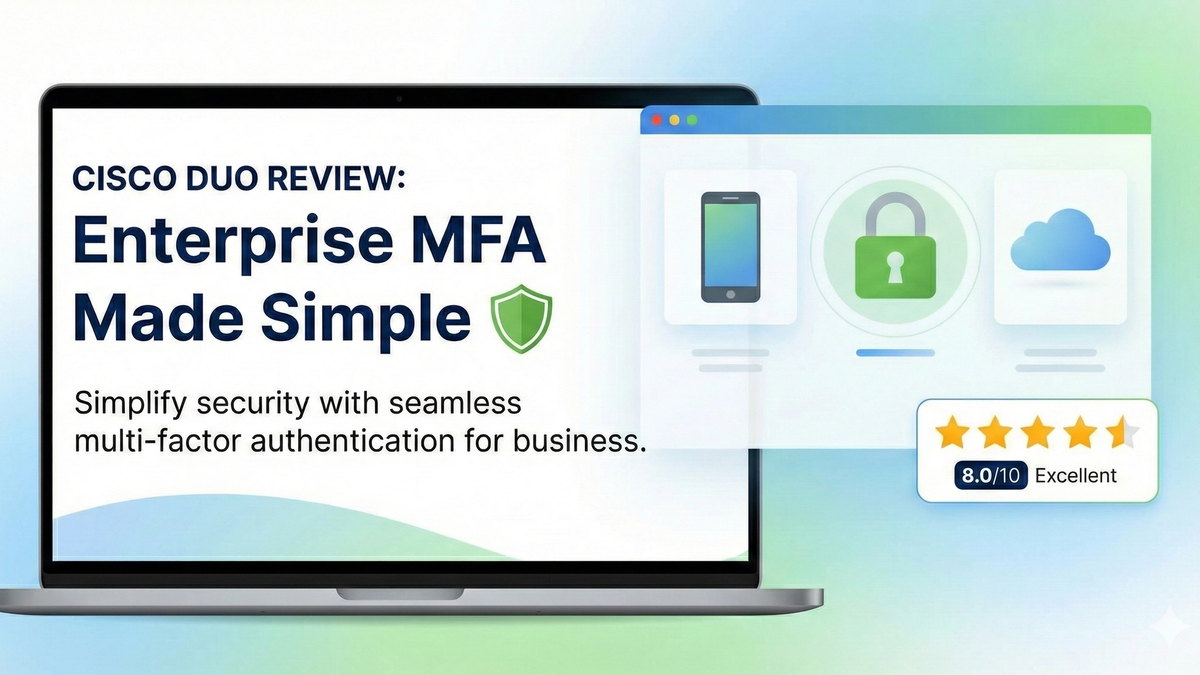
Cisco Duo Review: Enterprise MFA Made Simple
Cisco Duo delivers robust multi-factor authentication with one of the smoothest user experiences in the enterprise MFA space. While pricing can escalate quickly for larger teams, its device trust and adaptive policies make it a solid choice for security-conscious organizations.