
Understanding Healthcare Data Breaches and Protected Health Information
Healthcare data breaches represent one of the most critical security challenges facing modern healthcare organizations. Unlike credit card numbers that can be changed or bank accounts that can be...
Introduction
Healthcare data breaches represent one of the most critical security challenges facing modern healthcare organizations. Unlike credit card numbers that can be changed or bank accounts that can be frozen, medical information is permanent and uniquely personal. When Protected Health Information (PHI) falls into the wrong hands, the consequences extend far beyond financial loss—they can impact patient safety, personal privacy, and the fundamental trust between patients and healthcare providers.
The healthcare sector has become an increasingly attractive target for cybercriminals. According to industry reports, healthcare organizations experience data breaches at rates significantly higher than most other industries. A single breach can expose millions of patient records, containing everything from Social Security numbers and financial information to detailed medical histories and treatment plans.
Understanding healthcare data breaches and Protected Health Information isn't just important for healthcare professionals—it matters to everyone. Every patient who visits a doctor, fills a prescription, or undergoes a medical procedure generates PHI that must be protected. This article provides a comprehensive exploration of what constitutes PHI, how breaches occur, their real-world impact, and the practical steps organizations and individuals can take to protect sensitive health information.
Whether you're a healthcare administrator, IT professional, medical practitioner, or simply someone concerned about your personal health information, this guide will equip you with the knowledge needed to understand and address these critical privacy and security challenges.
Core Concepts
What is Protected Health Information (PHI)?
Protected Health Information, as defined by the Health Insurance Portability and Accountability Act (HIPAA), is any information about health status, provision of healthcare, or payment for healthcare that can be linked to a specific individual. This definition is deliberately broad and encompasses much more than most people realize.
PHI includes obvious identifiers like names, addresses, and Social Security numbers when combined with health information, but it also extends to:
Importantly, information must meet two criteria to be considered PHI: it must relate to healthcare in some way, and it must be individually identifiable. De-identified data that has been stripped of all identifying information is not considered PHI under HIPAA regulations.
What Constitutes a Healthcare Data Breach?
A healthcare data breach occurs when PHI is acquired, accessed, used, or disclosed in a manner not permitted under HIPAA regulations. The Department of Health and Human Services (HHS) defines a breach as an impermissible use or disclosure that compromises the security or privacy of PHI.
Not every unauthorized access automatically constitutes a reportable breach. Healthcare organizations must conduct a risk assessment to determine whether the compromised information poses a significant risk of financial, reputational, or other harm to affected individuals. However, HIPAA operates under a presumption that an impermissible use or disclosure is a breach unless the covered entity can demonstrate otherwise.
Breaches fall into several categories:
**Hacking/IT incidents**: Unauthorized access to electronic systems containing PHI, including malware attacks, ransomware, and network intrusions.
**Unauthorized access/disclosure**: When employees or other insiders access or share PHI without proper authorization, whether intentionally or accidentally.
**Theft**: Physical theft of devices, paper records, or equipment containing PHI.
**Loss**: Unintentional loss of devices, records, or media containing PHI.
**Improper disposal**: Failure to properly destroy PHI before discarding devices, paper records, or storage media.
HIPAA and Legal Framework
The Health Insurance Portability and Accountability Act of 1996 established the primary legal framework for protecting health information in the United States. HIPAA's Privacy Rule and Security Rule create national standards for protecting certain health information.
**The Privacy Rule** establishes standards for how PHI can be used and disclosed. It gives patients rights over their health information, including the right to access their records, request corrections, and receive notice of privacy practices.
**The Security Rule** specifically addresses electronic PHI (ePHI) and requires appropriate administrative, physical, and technical safeguards to ensure confidentiality, integrity, and security of ePHI.
The **HITECH Act** of 2009 strengthened HIPAA enforcement and established mandatory breach notification requirements. It also extended HIPAA obligations to business associates—third-party vendors who handle PHI on behalf of covered entities.
Covered entities under HIPAA include healthcare providers, health plans, and healthcare clearinghouses. Business associates include companies providing billing services, data analysis, legal services, consulting, cloud storage, and any other services requiring access to PHI.
Violations can result in substantial penalties. Civil monetary penalties range from $100 to $50,000 per violation, with an annual maximum of $1.5 million for each violation category. Criminal penalties for wrongful PHI disclosure can include fines up to $250,000 and imprisonment up to 10 years.
How It Works
Common Attack Vectors and Vulnerabilities
Understanding how healthcare data breaches occur requires examining both technical vulnerabilities and human factors that create opportunities for unauthorized access.
**PhishingPhishing🛡️A social engineering attack using fake emails or websites to steal login credentials or personal info. and Social EngineeringSocial Engineering🛡️The psychological manipulation of people into performing actions or divulging confidential information, exploiting human trust rather than technical vulnerabilities.**
Phishing remains one of the most successful attack methods targeting healthcare organizations. Attackers send emails disguised as legitimate communications from colleagues, vendors, or patients, tricking recipients into clicking malicious links, downloading infected attachments, or revealing login credentials.
Healthcare workers face particular phishing risks because they regularly receive communications from unfamiliar patients, insurance companies, and other healthcare providers. A well-crafted phishing email appearing to contain patient referral information or urgent lab results can easily deceive busy staff members.
**Ransomware Attacks**
Ransomware has become the nightmare scenario for healthcare organizations. Attackers encrypt critical systems and data, demanding payment for the decryption key. Healthcare providers face immense pressure to pay ransoms quickly because locked systems can prevent access to patient records needed for treatment, potentially putting lives at risk.
Modern ransomware attacks often employ "double extortion" tactics—encrypting data while also exfiltrating it and threatening to publicly release sensitive information if the ransom isn't paid. This means that even organizations with good backup systems face potential data breaches.
**Insider Threats**
Not all breaches involve external attackers. Insider threats account for a significant percentage of healthcare data breaches. These incidents involve employees, contractors, or other authorized users who:
Insider threats are particularly challenging because authorized users legitimately need access to PHI to perform their jobs, making it difficult to distinguish between appropriate and inappropriate access.
**Unsecured Databases and Misconfigured Systems**
Technical misconfigurations represent another significant vulnerabilityVulnerability🛡️A weakness in software, hardware, or processes that can be exploited by attackers to gain unauthorized access or cause harm.. Healthcare organizations increasingly rely on cloud services, databases, and networked systems that, if improperly configured, can expose PHI to the internet without authentication requirements.
Common misconfigurations include:
**Physical Security Breaches**
Despite increasing digitization, physical security remains crucial. Breaches occur when:
The Breach Lifecycle
Understanding how breaches unfold helps organizations implement more effective defenses.
**Initial Compromise**: Attackers gain initial access through phishing, exploiting vulnerabilities, stolen credentials, or physical access. This phase often goes undetected, with attackers maintaining persistence through backdoors.
**Lateral MovementLateral Movement🛡️Techniques attackers use to move through a network after initial compromise, seeking additional systems to control and data to steal.**: Once inside networks, attackers move laterally, escalating privileges and accessing additional systems. They map the environment, identifying valuable data repositories and critical systems.
**Data ExfiltrationData Exfiltration🛡️The unauthorized transfer of data from a computer or network, often performed by attackers before deploying ransomware to enable double extortion. or EncryptionEncryption🛡️The process of converting data into a coded format that can only be read with the correct decryption key.**: Depending on the attacker's goals, they either quietly exfiltrate data over time or rapidly encrypt systems in a ransomware attack. Data exfiltration may go unnoticed for months.
**Discovery**: The breach is discovered through security monitoring, system anomalies, ransom notes, law enforcement notification, or patients reporting suspicious activity with their information.
**Response and Investigation**: Organizations must contain the breach, investigate its scope, preserve evidence, and determine what PHI was compromised.
**Notification**: If the investigation confirms a reportable breach, organizations must notify affected individuals, HHS, and potentially the media within legally mandated
Related Reviews
REOLINK 4K Security Camera System Review: Professional PoE Surveillance at DIY Prices
The REOLINK 4K PoE security system delivers 8MP clarity, smart person/vehicle detection, 24/7 recording with 4TB storage, and plug-and-play installation for comprehensive home surveillance.
Ring Outdoor Cam Pro Review: 4K Security Camera with Radar-Powered Motion Detection
The Ring Outdoor Cam Pro delivers Retinal 4K video, 10x enhanced zoom, Low-Light Sight for true color night vision, and radar-powered 3D motion detection for precise security alerts.
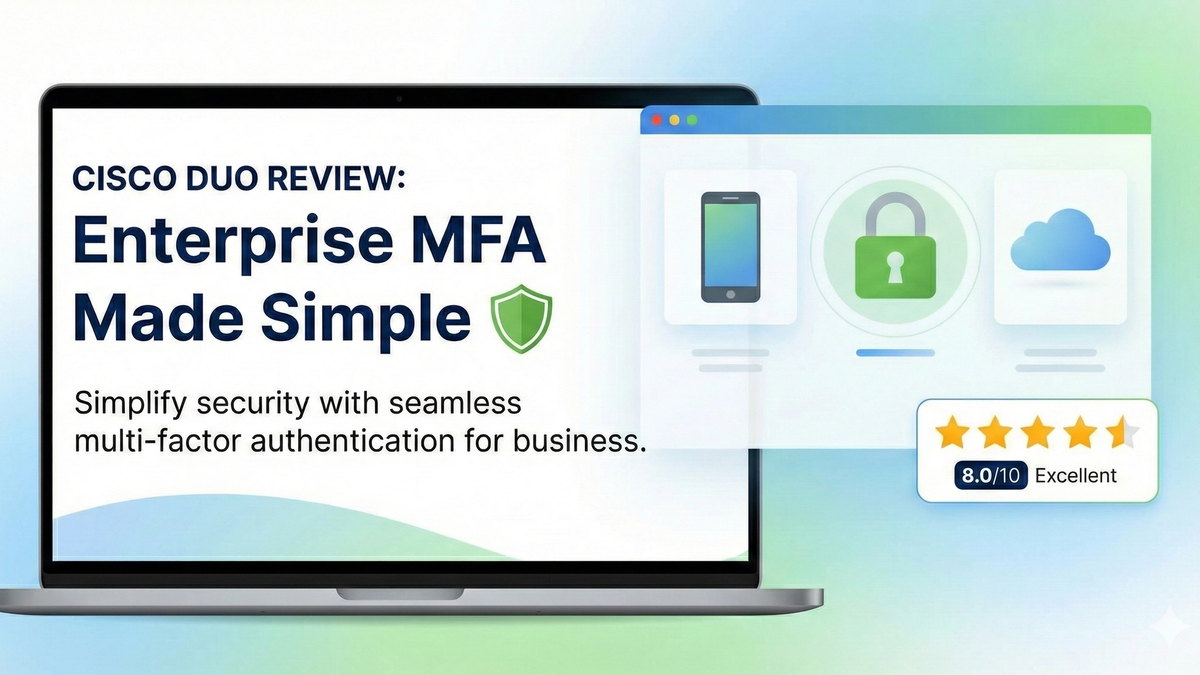
Cisco Duo Review: Enterprise MFA Made Simple
Cisco Duo delivers robust multi-factor authentication with one of the smoothest user experiences in the enterprise MFA space. While pricing can escalate quickly for larger teams, its device trust and adaptive policies make it a solid choice for security-conscious organizations.