
The Basics of Hardware Manufacturing Lead Times and Supply Chain Planning
In the world of hardware product development, few topics are as critical—yet often misunderstood—as manufacturing lead times and supply chain planning. Whether you're a startup founder preparing ...
Introduction
In the world of hardware product development, few topics are as critical—yet often misunderstood—as manufacturing lead times and supply chain planning. Whether you're a startup founder preparing to launch your first physical product, a product manager at an established company, or an engineer transitioning from software to hardware, understanding these concepts can mean the difference between a successful launch and a costly disaster.
Manufacturing lead time refers to the duration between placing an order with a manufacturer and receiving the finished products. Supply chain planning encompasses the strategic coordination of all activities involved in sourcing, procurement, conversion, and logistics management. Together, these elements form the backbone of hardware product delivery.
The stakes are high. A miscalculation in lead times can result in missed launch windows, lost revenue, disappointed customers, and damaged brand reputation. Conversely, proper planning can create competitive advantages, reduce costs, and enable responsive adaptation to market demands.
This article will demystify manufacturing lead times and supply chain planning, providing you with practical knowledge to navigate the complexities of hardware production. We'll explore fundamental concepts, examine how these systems work in practice, analyze real-world scenarios, and equip you with actionable strategies and tools to optimize your own hardware projects.
Core Concepts
Understanding Manufacturing Lead Time
Manufacturing lead time comprises several distinct phases, each with its own timeline and variables:
**Component Procurement Lead Time**: The period required to source and receive all necessary parts and materials. This varies dramatically based on component availability, supplier location, minimum order quantities (MOQs), and market conditions. Standard components might have lead times of 2-8 weeks, while specialized or currently scarce components (like certain semiconductors) can extend to 26-52 weeks or longer.
**Production Lead Time**: The actual manufacturing duration, including setup, production runs, quality control, and packaging. This depends on production complexity, factory capacity, order size, and production method. Injection molded parts might require 4-6 weeks for initial tooling plus 2-3 weeks per production run, while PCB assembly could take 1-3 weeks for prototype quantities.
**Quality Assurance and Testing**: Time allocated for inspection, testing, and certification. For consumer electronics, this might include electrical safety testing, EMC compliance, drop testing, and functional verification—adding 1-4 weeks depending on thoroughness and whether issues are discovered.
**Logistics and Shipping**: Transportation time from manufacturer to destination. Ocean freight from Asia to North America typically takes 4-6 weeks, air freight 1-2 weeks, and express shipping 3-7 days. Customs clearance adds another variable timeline.
Supply Chain Planning Fundamentals
**Demand Forecasting**: Predicting future product demand based on historical data, market trends, seasonality, marketing campaigns, and business objectives. Accurate forecasting drives all downstream planning decisions.
**Capacity Planning**: Ensuring manufacturing partners have adequate production capacity during your required timeframe. Factories often operate at 80-90% capacity, with prime production slots (especially pre-holiday seasons) booked months in advance.
**Inventory Management**: Balancing the costs of holding inventory against the risks of stockouts. This includes raw materials, work-in-progress, finished goods, and safety stock buffers.
**Buffer and Safety Stock**: Extra inventory maintained to accommodate demand variability, supply disruptions, or lead time uncertainty. The appropriate buffer depends on demand volatility, lead time reliability, and business tolerance for stockouts.
**Supply Chain Visibility**: The ability to track materials, components, and products throughout the supply chain. Greater visibility enables faster response to disruptions and more accurate planning.
Critical Path Analysis
In hardware manufacturing, multiple parallel activities occur simultaneously. Critical path analysis identifies the sequence of dependent activities that determines the minimum project timeline. For example, if your PCB fabrication takes 2 weeks and component procurement takes 8 weeks, components are on the critical path since PCB assembly cannot begin until both arrive.
Understanding your critical path helps you prioritize optimization efforts and identify where acceleration efforts will actually reduce total lead time versus where they'll simply create expensive idle inventory.
How It Works
The Manufacturing Lead Time Cascade
Let's walk through a typical hardware product journey from order placement to delivery:
**Week 0-1: Order Processing and Production Planning** Your purchase order triggers the manufacturer's internal processes: verifying specifications, confirming pricing, scheduling production slots, and generating bills of materials (BOMs). They identify which components are in stock and which must be ordered.
**Weeks 1-8: Component Procurement** The manufacturer orders all required parts from their suppliers. Standard resistors and capacitors arrive within 1-2 weeks. Common ICs ship in 3-4 weeks. Specialized sensors with longer lead times arrive at week 8. Nothing can proceed until all components are on hand.
**Weeks 8-10: Production Setup and Manufacturing** Production begins once all materials arrive. For electronics, PCBs are fabricated (if not already done), components are assembled through SMT (surface mount technology) and through-hole processes, and the boards are tested. For mechanical components, injection molds are loaded, parts are produced, and finishing operations are completed.
**Weeks 10-11: Assembly and Integration** Individual components come together into finished products. PCBs are integrated into enclosures, cables are attached, labels are applied, and units undergo functional testing.
**Weeks 11-12: Quality Assurance** Finished units undergo final inspection and testing according to your quality criteria. A percentage (often 1-10% depending on agreement) undergoes detailed testing, while visual inspection occurs for all units.
**Weeks 12-13: Packaging and Shipping Preparation** Products are packaged in retail packaging (if applicable), palletized, and prepared for shipment. Export documentation is prepared.
**Weeks 13-18: International Shipping and Customs** Goods ship via ocean freight, the most economical option for large quantities. The container travels from factory to port (1-3 days), waits for vessel loading (1-5 days), crosses the ocean (14-21 days), clears customs (1-5 days), and delivers to your warehouse (1-3 days).
**Total Timeline: 18 weeks (approximately 4.5 months)**
This represents a relatively smooth production run. Real-world complications frequently extend timelines by 20-50%.
Supply Chain Planning in Practice
Effective supply chain planning operates on multiple time horizons:
**Strategic Planning (12-24 months out)**: Identifying manufacturing partners, qualifying suppliers, developing component sourcing strategies, and establishing long-term capacity agreements. This includes decisions like single-source versus multi-source strategies and domestic versus offshore manufacturing.
**Tactical Planning (3-12 months out)**: Creating detailed demand forecasts, placing long-lead-time component orders, reserving production capacity, and coordinating logistics partnerships. This is where you commit to specific production volumes and timelines.
**Operational Planning (0-3 months out)**: Managing day-to-day execution, tracking shipments, resolving issues, expediting critical items, and communicating with stakeholders. This is reactive problem-solving within the framework established by strategic and tactical planning.
Information Flow and Coordination
Successful supply chain management requires constant information exchange between multiple parties:
Modern supply chains increasingly rely on digital tools to manage this complexity, from simple shared spreadsheets to sophisticated ERP (Enterprise Resource Planning) and SCM (Supply Chain Management) platforms.
Real-World Examples
Example 1: Consumer Electronics Startup - The Crowdfunding Campaign
A startup developed an innovative smart home device and launched a successful Kickstarter campaign in January, raising $500,000 with 2,500 backers expecting delivery in June—just five months away.
What Went Wrong:
The founders, first-time hardware entrepreneurs, underestimated virtually every timeline. Their plan assumed:
Reality:
Lessons: The founders failed to account for component lead times, didn't verify component availability before finalizing designs, and didn't build buffer time for inevitable issues. They also hadn't communicated with manufacturers to understand realistic timelines before promising delivery dates.
What Should Have Happened: With proper planning, they would have placed a PO immediately after the campaign closed in February, selected all components based on verified availability, built in a 20-30%
Related Reviews

REOLINK 4K Security Camera System Review: Professional PoE Surveillance at DIY Prices
The REOLINK 4K PoE security system delivers 8MP clarity, smart person/vehicle detection, 24/7 recording with 4TB storage, and plug-and-play installation for comprehensive home surveillance.
Ring Outdoor Cam Pro Review: 4K Security Camera with Radar-Powered Motion Detection
The Ring Outdoor Cam Pro delivers Retinal 4K video, 10x enhanced zoom, Low-Light Sight for true color night vision, and radar-powered 3D motion detection for precise security alerts.
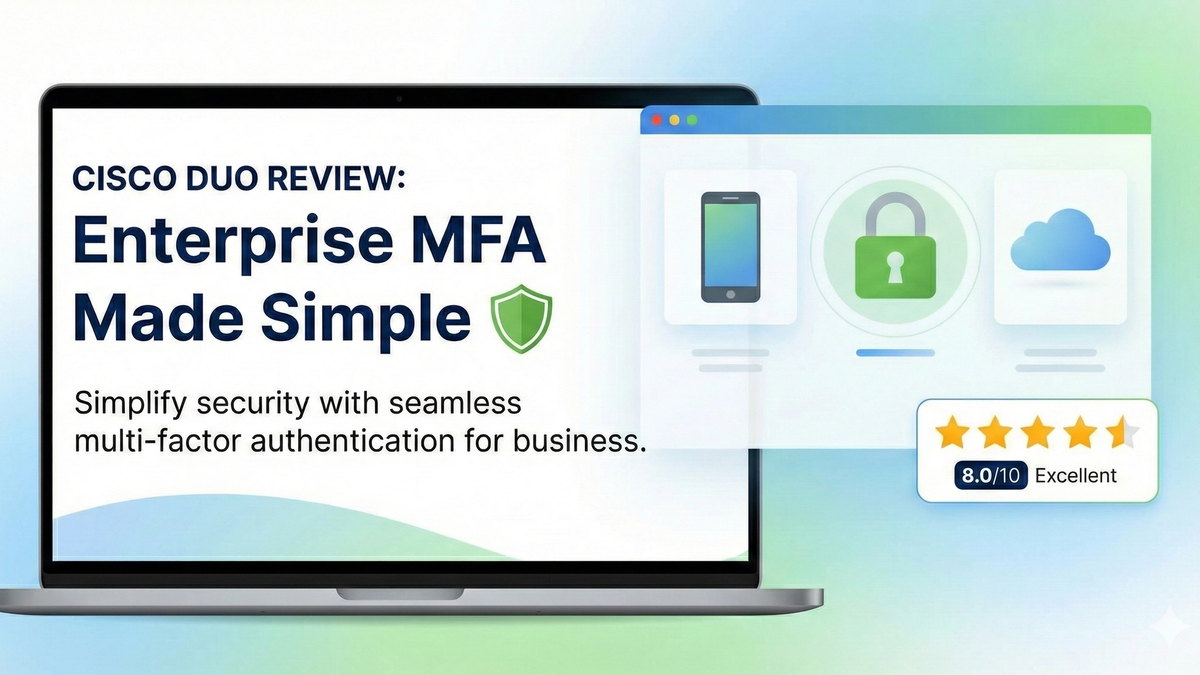
Cisco Duo Review: Enterprise MFA Made Simple
Cisco Duo delivers robust multi-factor authentication with one of the smoothest user experiences in the enterprise MFA space. While pricing can escalate quickly for larger teams, its device trust and adaptive policies make it a solid choice for security-conscious organizations.