Understanding Product Development Pipelines in Technology Companies
In the fast-paced world of technology, the difference between companies that consistently ship successful products and those that struggle often comes down to one critical factor: their product d...
Introduction
In the fast-paced world of technology, the difference between companies that consistently ship successful products and those that struggle often comes down to one critical factor: their product development pipeline. Whether you're a startup founder, product manager, engineer, or aspiring tech professional, understanding how modern technology companies move ideas from conception to launch is essential knowledge.
A product development pipeline is the systematic framework that guides how organizations conceptualize, design, build, test, and release products. Think of it as an assembly line for innovation—but instead of physical widgets, you're creating software applications, digital platforms, hardware devices, or integrated tech solutions.
The stakes are high. According to various industry studies, approximately 40% of developed products never make it to market, and of those that do, 95% fail to meet their objectives. These sobering statistics underscore why having a robust, well-structured product development pipeline isn't just beneficial—it's existential for tech companies.
This comprehensive guide will walk you through everything you need to know about product development pipelines: from foundational concepts to practical implementation strategies, real-world examples from leading tech companies, and the tools that can make or break your process.
Whether you're looking to optimize an existing pipeline or build one from scratch, this article will provide you with actionable frameworks and insights drawn from industry best practices.
Core Concepts
What Exactly Is a Product Development Pipeline?
A product development pipeline is a structured sequence of stages that transforms ideas into market-ready products. Unlike a simple checklist, a pipeline represents a continuous flow system where multiple products or features exist at different stages simultaneously, creating a steady stream of innovation.
The pipeline concept differs from traditional project management in several key ways:
**Continuous Flow**: Rather than treating each product as an isolated project, pipelines emphasize continuous throughputThroughput📖Actual amount of data successfully transferred over a connection, often lower than bandwidthBandwidth🌐Maximum data transfer rate of a network connection, measured in Mbps or Gbps... As one feature exits the pipeline, another enters, creating predictable delivery cadences.
**Stage Gates**: Each phase in the pipeline has specific entry and exit criteria. Products must meet defined standards before advancing, preventing poor-quality concepts from consuming resources downstream.
**Cross-Functional Integration**: Modern pipelines break down silos, requiring collaboration between product, engineering, design, marketing, and operations from the earliest stages.
**Feedback Loops**: Effective pipelines incorporate mechanisms to learn from each stage and feed insights back into the process, creating continuous improvement.
Key Stages in a Typical Pipeline
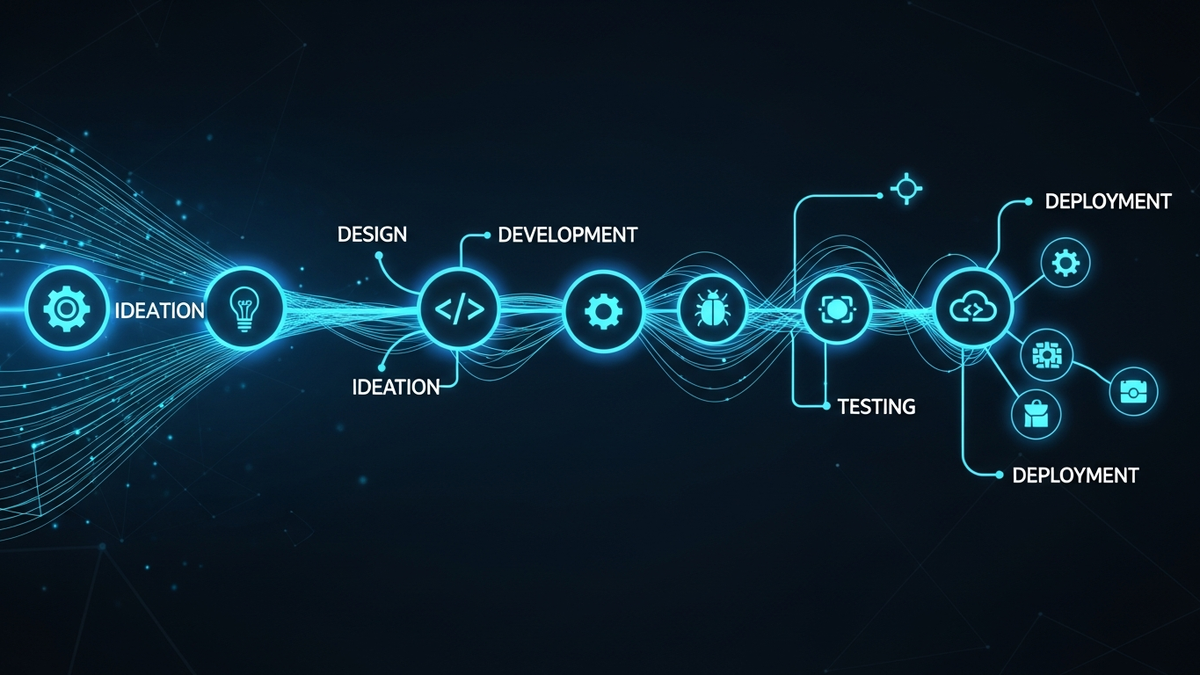
While specifics vary by company and industry, most technology product development pipelines include these fundamental stages:
**Discovery and Ideation**: Where ideas are generated, problems are identified, and opportunities are explored through market research, customer feedback, and competitive analysis.
**Validation**: The critical stage where assumptions are tested, customer needs are verified, and business viability is assessed through prototypes, user interviews, and market validation.
**Design and Specification**: Detailed product requirements are documented, user experiences are designed, technical architectures are planned, and success metrics are defined.
**Development**: The actual building phase where engineers write code, designers create assets, and the product takes tangible form through iterative sprints.
**Testing and Quality Assurance**: Comprehensive testing ensures the product functions correctly, meets performance standards, provides good user experience, and adheres to security requirements.
**Launch and Deployment**: The product is released to users, whether through staged rollouts, beta programs, or full public launches, with accompanying go-to-market activities.
**Post-Launch Optimization**: Monitoring, measuring, iterating, and improving based on real-world usage data and customer feedback.
Pipeline Maturity Levels
Technology companies typically operate at different levels of pipeline maturity:
**Ad Hoc (Level 1)**: Product development happens reactively with minimal process, inconsistent outcomes, and heavy reliance on individual heroics.
**Repeatable (Level 2)**: Basic processes exist and can be followed, though documentation may be informal and adherence varies across teams.
**Defined (Level 3)**: Standardized processes are documented, understood, and consistently followed across the organization with clear ownership.
**Managed (Level 4)**: Quantitative metrics guide the pipeline, data-driven decisions are standard, and processes are actively optimized based on performance.
**Optimizing (Level 5)**: Continuous improvement is embedded culturally, innovation in the process itself occurs regularly, and the pipeline adapts dynamically to changing conditions.
Most successful technology companies operate at Level 3 or above, though reaching Level 5 represents a significant competitive advantage.
How It Works
The End-to-End Flow
Understanding how a product development pipeline functions requires following a hypothetical feature through each stage. Let's track a new feature for a fictional project management software company.
**Stage 1: Discovery**
The product team notices through customer support tickets and user analytics that teams struggle with resource allocation across projects. Product managers conduct user interviews with twenty customers, create journey maps, and identify the core problem: managers lack visibility into team member workload across multiple projects.
Exit criteria for this stage include validated problem statements, quantified opportunity size (potential impact on key metrics), and preliminary competitive analysis. A discovery brief documents findings, and the concept advances to validation.
**Stage 2: Validation**
The team creates low-fidelity prototypes—perhaps just clickable wireframes or even paper sketches. They test these with fifteen target users, measuring comprehension, perceived value, and behavioral indicators of intent to use.
They also conduct a technical feasibility assessment with engineering, estimate development costs, and project potential revenue impact. A business case is built showing the feature could increase customer retention by 8% based on survey data from users who cited this gap as a pain point.
The validation stage gate requires positive user testing results, confirmed technical feasibility, and approved business case. Once these criteria are met, the feature proceeds to design.
**Stage 3: Design and Specification**
Designers create high-fidelity mockups and interactive prototypes. Product managers write detailed specifications including user stories, acceptance criteria, edge cases, and success metrics. Engineers contribute technical design documents outlining architecture, database schemas, API contracts, and integration points.
The specifications undergo review by cross-functional stakeholders. Security assesses potential vulnerabilities. Legal reviews privacy implications. Customer success evaluates supportability. The design phase doesn't close until all stakeholders approve and a definition of "done" is agreed upon.
**Stage 4: Development**
Engineering begins implementation using the company's development methodology—typically Agile sprints of one to three weeks. The feature is broken into incremental deliverables that can be built and tested progressively.
Throughout development, daily standups maintain alignment, and regular demos keep stakeholders informed. Product and design remain engaged, answering questions and making refinement decisions. The codebase undergoes continuous integration testing, catching defects early.
Development is considered complete when all acceptance criteria are met, test coverage meets standards (perhaps 80% code coverage), and the feature branch passes all automated checks.
**Stage 5: Testing and QA**
Quality assurance engineers execute comprehensive test plans covering functional testing, integration testing, performance testing, security testing, accessibility testing, and cross-platform compatibility. Beta users may receive early access to provide real-world feedback.
Any critical or high-priority bugs block advancement. Medium and low-priority issues might be documented for post-launch fixes depending on severity and company standards.
**Stage 6: Launch**
The feature is initially released to 5% of users as part of a staged rollout. Product analytics monitors adoption rates, error rates, performance metrics, and user engagement. Gradual expansion to 25%, then 50%, then 100% occurs over two weeks, with ability to halt and roll back if issues emerge.
Marketing coordinates announcement timing with blog posts, email campaigns, and in-app notifications. Customer success prepares support documentation and trains the team on common questions.
**Stage 7: Post-Launch**
For four weeks following full launch, the team closely monitors the feature's performance against success metrics defined in design. User feedback is collected through surveys and support channels. Usage analytics reveal actual behavior patterns.
A retrospective meeting reviews what worked well and what could improve. Insights feed back into the discovery stage for future enhancements, completing the cycle.
Pipeline Management and Governance
Effective pipeline operation requires dedicated management structures:
**Pipeline Review Meetings**: Regular (typically weekly or biweekly) forums where leadership reviews the pipeline's contents, approves stage transitions, reallocates resources, and makes go/no-go decisions.
**Capacity Planning**: Balancing pipeline input with available resources ensures sustainable flow without overwhelming teams or creating bottlenecks.
**Prioritization Frameworks**: Systematic methods like RICE (Reach, Impact, Confidence, Effort), weighted scoring, or value vs. complexity matrices determine what enters the pipeline and in what order.
**Portfolio Management**: Maintaining strategic balance across incremental improvements, new features, technical debt, and breakthrough innovations prevents the pipeline from becoming too skewed in any direction.
Real-World Examples
Spotify's "Think It, Build It, Ship It, Tweak It" Pipeline
Spotify has publicly shared insights into their product development approach, which exemplifies modern pipeline thinking. Their framework consists of four key phases:
**Think It**: Small teams (called "squads") identify problems worth solving through data analysis, user
Related Reviews

REOLINK 4K Security Camera System Review: Professional PoE Surveillance at DIY Prices
The REOLINK 4K PoE security system delivers 8MP clarity, smart person/vehicle detection, 24/7 recording with 4TB storage, and plug-and-play installation for comprehensive home surveillance.
Ring Outdoor Cam Pro Review: 4K Security Camera with Radar-Powered Motion Detection
The Ring Outdoor Cam Pro delivers Retinal 4K video, 10x enhanced zoom, Low-Light Sight for true color night vision, and radar-powered 3D motion detection for precise security alerts.
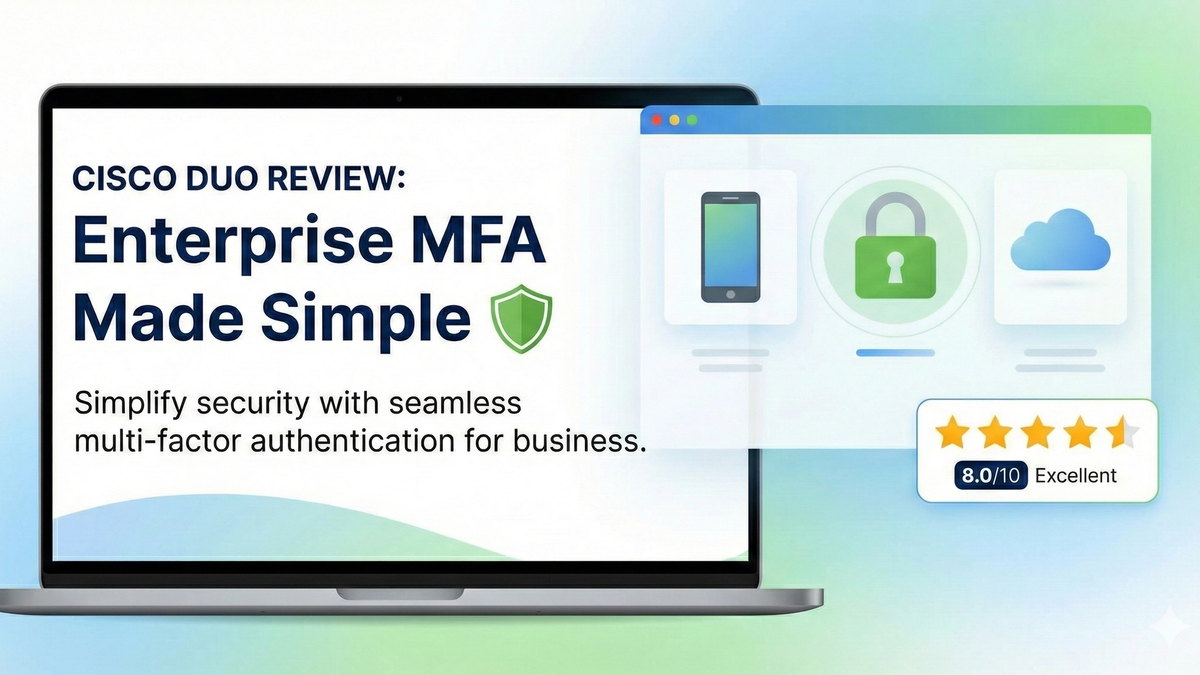
Cisco Duo Review: Enterprise MFA Made Simple
Cisco Duo delivers robust multi-factor authentication with one of the smoothest user experiences in the enterprise MFA space. While pricing can escalate quickly for larger teams, its device trust and adaptive policies make it a solid choice for security-conscious organizations.