
Understanding Mobile Security Vulnerabilities and the Importance of Software Updates
In an era where smartphones have become extensions of ourselves, containing everything from banking credentials to personal conversations and health data, mobile security has never been more crit...
Introduction
In an era where smartphones have become extensions of ourselves, containing everything from banking credentials to personal conversations and health data, mobile security has never been more critical. Yet, one of the simplest and most effective security measures—installing software updates—is frequently ignored or postponed by millions of users worldwide.
This comprehensive guide explores the complex landscape of mobile security vulnerabilities, explains why software updates serve as your primary defense mechanism, and provides actionable strategies for protecting your mobile devices. Whether you're a casual smartphone user or a technology professional, understanding these concepts will fundamentally change how you approach mobile device security.
Mobile devices face an evolving threat landscape that grows more sophisticated daily. Cybercriminals continuously develop new attack vectors, exploitExploit🛡️Code or technique that takes advantage of a vulnerability to cause unintended behavior, such as gaining unauthorized access. previously unknown vulnerabilities, and leverage social engineeringSocial Engineering🛡️The psychological manipulation of people into performing actions or divulging confidential information, exploiting human trust rather than technical vulnerabilities. tactics to compromise devices. Meanwhile, manufacturers and security researchers work tirelessly to identify weaknesses, develop patches, and distribute updates that close security gaps before they can be exploited at scale.
The stakes are remarkably high. A compromised mobile device can expose sensitive personal information, financial data, corporate secrets, and even physical location history. Beyond individual privacy concerns, breached devices can serve as entry points into larger networks, potentially compromising entire organizations.
Core Concepts
What Are Mobile Security Vulnerabilities?
Mobile security vulnerabilities are weaknesses or flaws in a device's operating system, applications, or hardware that can be exploited by malicious actors to gain unauthorized access, steal data, or compromise device functionality. These vulnerabilities exist across the entire mobile ecosystem, from the lowest-level firmwareFirmware🏠Permanent software programmed into a device's hardware that controls its basic functions. to user-facing applications.
**Operating System Vulnerabilities** represent flaws in the core software that runs your device—iOS, Android, or other mobile operating systems. These vulnerabilities are particularly dangerous because they can affect system-wide security, potentially giving attackers deep access to all device functions and data.
**Application Vulnerabilities** occur within individual apps, whether developed by major corporations or independent developers. These might include improper data handling, insecure communication protocols, or flawed authentication mechanisms. Even reputable apps from official app stores can contain vulnerabilities, either through coding errors or outdated dependencies.
**Hardware Vulnerabilities** exist at the physical component level, such as the processor or wireless chips. These are often the most challenging to address, as they may require hardware replacements rather than software patches. Examples include the Spectre and Meltdown vulnerabilities that affected processors across multiple device types.
**Network and Communication Vulnerabilities** relate to how devices transmit and receive data. Weaknesses in Wi-Fi protocols, Bluetooth implementations, or cellular communication standards can be exploited to intercept data or inject malicious code.
The Software Update Ecosystem
Software updates encompass several categories, each serving specific security and functional purposes:
**Security Patches** specifically address known vulnerabilities. These updates may be released on regular schedules (like Android's monthly security bulletins) or as emergency responses to critical threats. Security patches typically focus exclusively on closing security gaps without adding new features.
**Operating System Updates** include major version upgrades (like iOS 16 to iOS 17) and minor updates (like iOS 17.1 to 17.2). While these often introduce new features, they also include comprehensive security improvements, updated security frameworks, and fixes for multiple vulnerabilities.
**Application Updates** come from individual app developers and may address security issues specific to their software. Developers continuously update apps to fix vulnerabilities discovered through security research, user reports, or their own testing processes.
**Firmware Updates** modify the low-level software controlling device hardware components. These updates can address security vulnerabilities in components like modems, Wi-Fi chips, or processor microcode.
The VulnerabilityVulnerability🛡️A weakness in software, hardware, or processes that can be exploited by attackers to gain unauthorized access or cause harm. Discovery and Disclosure Process
Understanding how vulnerabilities are discovered and addressed helps contextualize the importance of updates. Security researchers, both independent and employed by companies, continuously analyze software looking for weaknesses. When discovered, vulnerabilities typically follow a "responsible disclosure" process:
This process aims to protect users by ensuring fixes are available before attackers learn about vulnerabilities. However, "zero-dayZero-Day🛡️A security vulnerability that is exploited or publicly disclosed before the software vendor can release a patch, giving developers 'zero days' to fix it." vulnerabilities—those exploited before patches exist—represent serious threats that bypass this protective timeline.
How It Works
How Vulnerabilities Are Exploited
Understanding exploitation mechanisms demystifies why updates matterMatter🏠A new universal smart home standard backed by Apple, Google, and Amazon for cross-platform compatibility. so urgently. Let's examine several common attack vectors:
**Buffer OverflowBuffer Overflow🛡️A vulnerability where a program writes data beyond the boundaries of allocated memory, potentially overwriting adjacent memory and allowing attackers to execute malicious code. Attacks** occur when applications don't properly validate input data size, allowing attackers to inject malicious code into memory spaces where it shouldn't exist. This code can then execute with the application's privileges, potentially gaining system-level access. Mobile browsers, messaging apps, and media players have all been vulnerable to buffer overflow attacks.
**Privilege EscalationPrivilege Escalation🛡️An attack technique where an adversary gains elevated access rights beyond what was initially granted.** exploits allow attackers to gain higher-level permissions than they should possess. An attacker might start with limited app-level access and exploit a vulnerability to gain root or administrator privileges, giving them complete control over the device.
**Remote Code Execution (RCE)** vulnerabilities are among the most severe, allowing attackers to run arbitrary code on your device without physical access. These might be triggered by viewing a malicious image, receiving a specially crafted text message, or visiting a compromised website.
**Man-in-the-Middle (MITM) Attacks** exploit network communication vulnerabilities, intercepting data traveling between your device and servers. Attackers can steal credentials, session tokens, or sensitive data, and even modify communications in real-time.
How Software Updates Protect You
Software updates implement various protective mechanisms:
**Code Modification** directly changes vulnerable code segments, replacing flawed logic with secure implementations. For example, an update might add proper input validation to prevent buffer overflows or implement correct permission checks to prevent privilege escalation.
**Security Framework Enhancements** update the underlying security architecture of operating systems. These might include improved sandboxing (isolating apps from each other and system resources), enhanced encryptionEncryption🛡️The process of converting data into a coded format that can only be read with the correct decryption key. standards, or more robust authentication mechanisms.
**Dependency Updates** replace outdated libraries and components that contain known vulnerabilities. Modern apps rely on numerous third-party libraries; when vulnerabilities are discovered in these shared components, updates ensure devices use patched versions.
**Hardening Measures** make exploitation more difficult even if vulnerabilities exist. Techniques like Address Space Layout Randomization (ASLR) randomize memory locations to make attacks harder to execute, while stack canaries detect buffer overflow attempts before they can cause damage.
The Update Distribution Process
Understanding how updates reach your device illuminates why installation timing varies:
**Manufacturer Development**: When operating system developers (Apple, Google) identify vulnerabilities, their engineering teams develop patches, test them extensively to ensure they don't introduce new problems, and prepare update packages.
**Carrier and OEM Customization**: For Android devices, the update often passes through additional layers. Device manufacturers (Samsung, Google, Xiaomi) customize Android for their hardware, while mobile carriers may add further modifications. Each layer introduces testing and approval delays.
**Distribution and Installation**: Updates are delivered through over-the-air (OTA) mechanisms, typically staged rollouts where small user percentages receive updates first. This strategy allows developers to catch any problems before worldwide distribution.
**User Installation**: Finally, the update awaits user action. Some updates install automatically during specified time windows, while others require manual approval. This final step is where security often breaks down—devices remain vulnerable until users actually install available updates.
Real-World Examples
The Pegasus Spyware Campaign
Perhaps no example better illustrates mobile vulnerability severity than NSO Group's Pegasus spyware, which exploited zero-click vulnerabilities in iOS and Android. In 2021, researchers discovered that Pegasus could compromise devices through a zero-click iMessage exploit—users needed only to receive a message, not even open it, for their devices to be completely compromised.
The spyware gained full device access, enabling microphone and camera activation, message reading, location tracking, and credential harvesting. Targets included journalists, activists, and government officials across dozens of countries. Apple responded with emergency iOS updates patching the vulnerabilities, demonstrating why immediate update installation matters critically—even for devices previously considered highly secure.
This case illustrates several key concepts: sophisticated attackers will find and exploit vulnerabilities in any system; zero-click exploits eliminate reliance on user mistakes; and vendor responsiveness with security patches directly determines how long users remain exposed.
The Stagefright Android Vulnerability
Discovered in 2015, Stagefright represented a watershed moment for Android security awareness. This vulnerability existed in Android's media playback library and could be exploited simply by sending a specially crafted MMS message to a device. The recipient didn't need to open or play the media—automatic message processing triggered the vulnerability.
Approximately 950 million Android devices were vulnerable at discovery. The exploitation could enable remote code execution, giving attackers complete device control. Google rapidly developed patches, but the fragmented Android ecosystem meant many devices never received updates. Some manufacturers quickly distributed fixes, while others took months, and some older devices never received patches at all.
Stagefright highlighted the critical importance of both rapid update development and streamlined distribution channels. It also acceler
Related Reviews

REOLINK 4K Security Camera System Review: Professional PoE Surveillance at DIY Prices
The REOLINK 4K PoE security system delivers 8MP clarity, smart person/vehicle detection, 24/7 recording with 4TB storage, and plug-and-play installation for comprehensive home surveillance.
Ring Outdoor Cam Pro Review: 4K Security Camera with Radar-Powered Motion Detection
The Ring Outdoor Cam Pro delivers Retinal 4K video, 10x enhanced zoom, Low-Light Sight for true color night vision, and radar-powered 3D motion detection for precise security alerts.
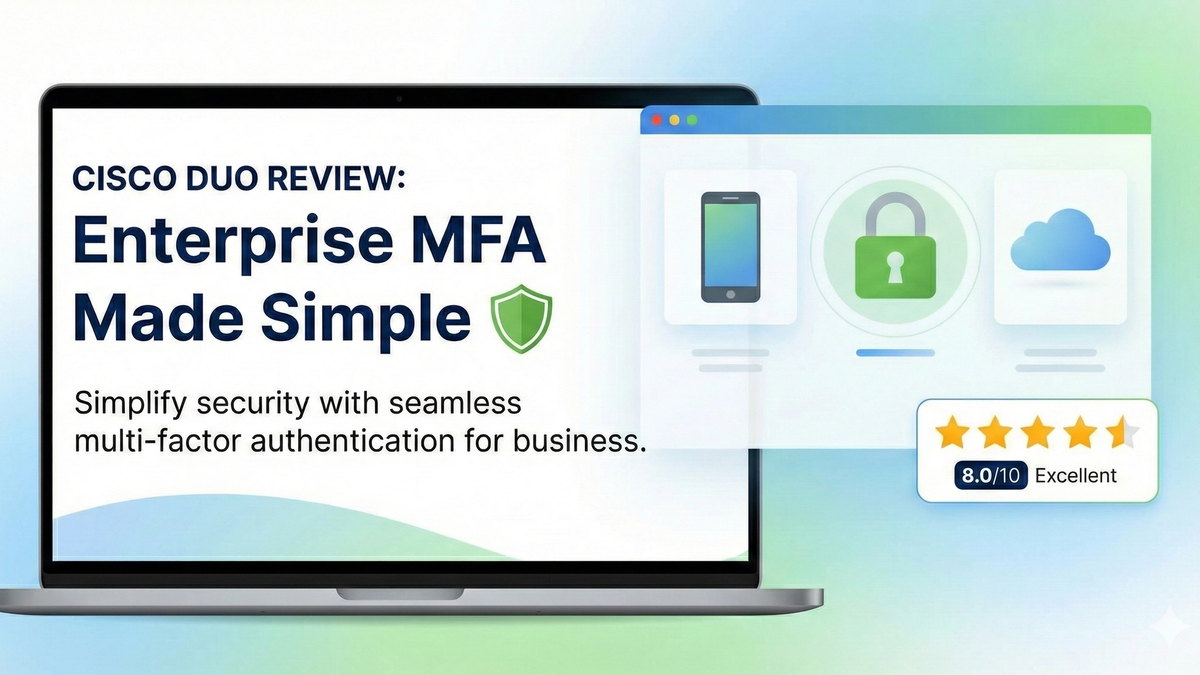
Cisco Duo Review: Enterprise MFA Made Simple
Cisco Duo delivers robust multi-factor authentication with one of the smoothest user experiences in the enterprise MFA space. While pricing can escalate quickly for larger teams, its device trust and adaptive policies make it a solid choice for security-conscious organizations.