
What Are Zero-Day Vulnerabilities and Why Do They Matter
In the constant battle between security professionals and cybercriminals, zero-day vulnerabilities represent one of the most dangerous weapons in an attacker's arsenal. These security flaws are e...
Introduction
In the constant battle between security professionals and cybercriminals, zero-dayZero-Day🛡️A security vulnerability that is exploited or publicly disclosed before the software vendor can release a patchPatch🛡️A software update that fixes security vulnerabilities, bugs, or adds improvements to an existing program., giving developers 'zero days' to fix it. vulnerabilities represent one of the most dangerous weapons in an attacker's arsenal. These security flaws are exploited before software developers even know they exist, leaving users defenseless against sophisticated attacks. Understanding zero-day vulnerabilities isn't just for security professionals—it's essential knowledge for anyone who uses technology in today's interconnected world.
A zero-day vulnerabilityVulnerability🛡️A weakness in software, hardware, or processes that can be exploited by attackers to gain unauthorized access or cause harm. gets its name from the fact that developers have had "zero days" to fix the problem before it's exploited. Unlike known vulnerabilities that have patches or workarounds available, zero-days exist in a precarious state where the defense hasn't caught up to the threat. This makes them extraordinarily valuable on both legitimate security markets and underground criminal networks, with prices ranging from thousands to millions of dollars depending on the target system.
The stakes couldn't be higher. Zero-day exploits have been used to steal billions of dollars, compromise national security, invade personal privacy, and disrupt critical infrastructure. From the Stuxnet worm that targeted Iranian nuclear facilities to the ransomware attacks that cripple hospitals, zero-days play starring roles in the most consequential cybersecurity incidents of our time.
In this comprehensive guide, we'll explore what zero-day vulnerabilities are, how they work, why they matterMatter🏠A new universal smart home standard backed by Apple, Google, and Amazon for cross-platform compatibility. so much, and most importantly, what you can do to protect yourself and your organization from these invisible threats.
Core Concepts
What Exactly Is a Zero-Day Vulnerability?
A zero-day vulnerability is a software security flaw that is unknown to the software vendor or the public. The term encompasses three related concepts that are often used interchangeably but have distinct meanings:
**Zero-Day Vulnerability**: The actual flaw or weakness in the software code that could be exploited to compromise security. This might be a buffer overflowBuffer Overflow🛡️A vulnerability where a program writes data beyond the boundaries of allocated memory, potentially overwriting adjacent memory and allowing attackers to execute malicious code., an authentication bypassAuthentication Bypass📖A security vulnerability that allows an attacker to circumvent the login verification process and gain unauthorized access to a system without providing valid credentials., a privilege escalationPrivilege Escalation🛡️An attack technique where an adversary gains elevated access rights beyond what was initially granted. bug, or any number of coding errors that create security gaps.
**Zero-Day ExploitExploit🛡️Code or technique that takes advantage of a vulnerability to cause unintended behavior, such as gaining unauthorized access.**: The method or code that takes advantage of the vulnerability to actually attack a system. While a vulnerability is the weakness, an exploit is the tool that weaponizes it. Creating a working exploit often requires significant technical expertise and time.
**Zero-Day Attack**: An actual incident where someone uses a zero-day exploit to compromise systems. This is the vulnerability and exploit in action, causing real-world damage.
The Zero-Day Lifecycle
Zero-day vulnerabilities go through several distinct phases:
**Discovery**: Someone—a security researcher, a cybercriminal, an intelligence agency, or even an accidental user—discovers a flaw in software. The identity of the discoverer often determines what happens next.
**Development**: If the discoverer has malicious intent or wants to sell the vulnerability, they develop an exploit that can reliably take advantage of the flaw.
**Release/Use**: The exploit is either sold on underground markets, used for targeted attacks, disclosed to the vendor, or made public. Until this moment, the vulnerability remains truly "zero-day."
**Discovery by Vendor**: The software vendor becomes aware of the vulnerability, either through responsible disclosure, by detecting attacks in the wild, or through public revelation.
**Patch Development**: The vendor works to create a fix, which can take hours to months depending on the complexity of the issue and the vendor's resources.
**Patch Distribution**: The fix is released to users, though deployment often takes considerable time as organizations test and roll out updates.
**Post-Patch Period**: Even after a patch exists, systems remain vulnerable until actually updated. Many organizations lag weeks or months behind, and some systems never get patched at all.
Why "Zero-Day" Matters
The "zero-day" designation is significant because it represents a window of absolute vulnerability. Traditional security approaches rely heavily on knowing what threats exist so defenses can be designed accordingly. With zero-days, defenders are working blind.
This information asymmetry creates an enormous advantage for attackers. While security teams deploy antivirus software, firewalls, and intrusion detection systems based on known threat signatures, zero-day exploits sail right past these defenses because they've never been seen before.
The economic implications are substantial. The zero-day market operates in both legitimate and criminal spheres. Companies like Zerodium publicly advertise bounties up to $2.5 million for specific zero-day exploits. Government agencies worldwide purchase zero-days for intelligence and military operations. Criminal organizations use them for financial fraud and ransomware campaigns.
How It Works
Common Types of Zero-Day Vulnerabilities
Understanding the technical nature of zero-day vulnerabilities helps illustrate why they're so difficult to prevent:
**Memory Corruption Vulnerabilities**: These include buffer overflows, use-after-free bugs, and heap corruption issues. When a program doesn't properly manage memory, attackers can inject malicious code or crash systems. Despite decades of awareness, memory corruption remains a leading source of critical vulnerabilities, particularly in software written in C and C++.
**Logic Flaws**: Sometimes the code works exactly as written, but the design itself contains security weaknesses. Authentication bypasses, privilege escalation bugs, and race conditions fall into this category. These are often harder to detect through automated testing because the code isn't technically broken—it just does something dangerous.
**Injection Vulnerabilities**: SQL injection, command injectionCommand Injection🛡️A security vulnerability that allows attackers to execute arbitrary operating system commands on the host system through a vulnerable application., and cross-site scripting (XSS) occur when applications don't properly validate user input. Attackers inject malicious commands that the application executes with its own privileges.
**Cryptographic Weaknesses**: Flaws in how encryptionEncryption🛡️The process of converting data into a coded format that can only be read with the correct decryption key. is implemented can allow attackers to decrypt sensitive data, forge signatures, or bypass authentication. The Heartbleed bug is a famous example where an implementation error in OpenSSL exposed massive amounts of private data.
How Attackers Find Zero-Days
The discovery of zero-day vulnerabilities isn't random—it requires sophisticated technical approaches:
**Fuzzing**: Automated tools send massive amounts of malformed or unexpected data to applications, watching for crashes or unusual behavior that might indicate a vulnerability. Modern fuzzing has become incredibly sophisticated, using machine learning and feedback loops to efficiently explore possible inputs.
**Code Auditing**: Security researchers painstakingly review source code (when available) or reverse-engineer compiled binaries looking for dangerous patterns and potential weaknesses. This manual approach is time-intensive but often uncovers subtle logic flaws that automated tools miss.
**Differential Testing**: Comparing how different implementations of the same protocol or standard handle edge cases can reveal bugs in one implementation that others avoided.
**Capture and Analysis**: Studying malware samples and attack traffic can reveal zero-day exploits already being used in the wild. Some zero-days are discovered only after attackers have been exploiting them for months or years.
How Zero-Day Exploits Work
Once a vulnerability is discovered, creating a working exploit involves several steps:
**Triggering the Vulnerability**: The attacker must find a way to reliably trigger the flaw through normal program interfaces. This might involve crafting a specific file format, sending particular network packets, or navigating a precise sequence of user actions.
**Controlling Execution**: For code execution vulnerabilities, the attacker needs to redirect program flow to their malicious code. This often involves bypassing security features like Address Space Layout Randomization (ASLR) and Data Execution Prevention (DEP).
**Payload Delivery**: The exploit delivers the actual malicious payload—the code that accomplishes the attacker's objective, whether that's installing backdoors, stealing data, or establishing persistence.
**Covering Tracks**: Sophisticated exploits include anti-forensic techniques to hide evidence of the attack and prevent detection.
Real-World Examples
Stuxnet: The Most Famous Zero-Day Attack
Discovered in 2010, Stuxnet remains the gold standard of zero-day attacks. This sophisticated worm targeted Iranian nuclear enrichment facilities using an unprecedented four zero-day vulnerabilities in Windows, along with additional exploits.
Stuxnet's goal was highly specific: sabotaging industrial control systems managing uranium enrichment centrifuges. The malware spread through USB drives, exploited Windows vulnerabilities to propagate through networks, and then targeted specific Siemens industrial control systems. Once in place, it manipulated centrifuge speeds while reporting normal operations to monitoring systems, causing physical damage while evading detection.
The attack demonstrated several concerning realities about zero-day attacks:
The Sony Pictures Hack
In 2014, attackers believed to be working for North Korea used zero-day exploits to completely compromise Sony Pictures Entertainment's network. The attack destroyed data, leaked confidential emails and unreleased films, and crippled operations for weeks.
While attribution remains contentious, the attack showed how zero-days could be used for maximum disruption and embarrassment. The leaked data included employee personal information, executive communications revealing unflattering opinions, and sensitive business information that caused lasting damage to the company's reputation.
Operation Aurora
In 2009-2010, Google and dozens of other major companies
Related Reviews
REOLINK 4K Security Camera System Review: Professional PoE Surveillance at DIY Prices
The REOLINK 4K PoE security system delivers 8MP clarity, smart person/vehicle detection, 24/7 recording with 4TB storage, and plug-and-play installation for comprehensive home surveillance.
Ring Outdoor Cam Pro Review: 4K Security Camera with Radar-Powered Motion Detection
The Ring Outdoor Cam Pro delivers Retinal 4K video, 10x enhanced zoom, Low-Light Sight for true color night vision, and radar-powered 3D motion detection for precise security alerts.
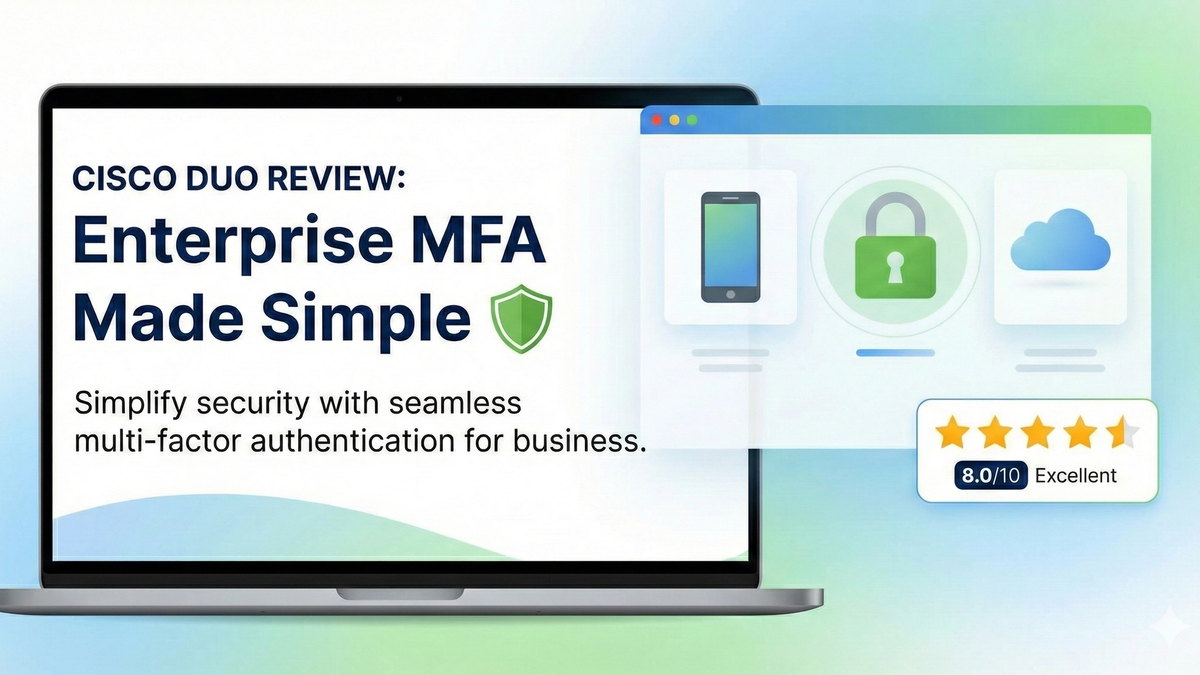
Cisco Duo Review: Enterprise MFA Made Simple
Cisco Duo delivers robust multi-factor authentication with one of the smoothest user experiences in the enterprise MFA space. While pricing can escalate quickly for larger teams, its device trust and adaptive policies make it a solid choice for security-conscious organizations.