Planning for Repeat Zero-Days in Remote-Access Appliances
Edge gateways get exploited again and again for structural reasons. How to plan on four timescales so the next zero-day is a contained event instead of a domain-wide one.
The SonicWall SMA1000 has now been exploited through zero-dayZero-Day🛡️A security vulnerability that is exploited or publicly disclosed before the software vendor can release a patchPatch🛡️A software update that fixes security vulnerabilities, bugs, or adds improvements to an existing program., giving developers 'zero days' to fix it. vulnerabilities three times in nine months: a December 2025 privilege-escalation chain, a July 2026 SSRF-and-injection chain that ended with ransomware operators using it, and the September 2026 CVE-2026-83548 chain that SonicWall confirmed was under active exploitation on the day it published the fix. Any one of those is a patching problem. Three in a row is a planning problem, and the plan cannot be "patch faster," because the September vulnerable range topped out at exactly the build that the July patch installed. An organization that did everything right in July was fully exposed in September.
This piece is about how to plan for that reality across every remote-access appliance you own, whichever vendor's name is on it.
Why Edge Appliances Are Repeat Targets
The pattern is not specific to one vendor. Remote-access gateways, SSL VPN concentrators, and secure-access appliances from most major vendors have appeared in CISA's KEV catalog repeatedly, and for the same structural reasons:
- They are internet-facing by definition. There is no way to put a remote access portal behind something else.
- They hold identity material. Credentials, session databases, and often MFA seeds live on the box, because the box is the authentication point.
- They sit on the trust boundary. A compromised appliance has an interface on the internal network and is expected to originate connections into it.
- They are opaque. Operators cannot install EDR, cannot read the code, and often cannot get a shell. Detection depends entirely on vendor logging.
- They bundle many services on one image, which produces the SSRF-into-privileged-service chain described in How SSRF Reaches Internal Services Behind the Perimeter.
- They are a monoculture. One exploitExploit🛡️Code or technique that takes advantage of a vulnerability to cause unintended behavior, such as gaining unauthorized access. works against every customer, which makes the research investment worthwhile for attackers.
Once a product has been targeted successfully, the attacker's cost of finding the next flaw drops. They already understand the architecture, and vendors typically fix the reported bug rather than the class. That is why the second and third zero-days arrive faster than the first.
Plan on Four Timescales
A useful plan separates what happens in the next 72 hours from what happens in the next budget cycle.
Hours: the KEV response
For an appliance with an exploit history, the target is to have the fix applied within 24 hours of the vendor advisory, not the 72-hour federal deadline. That is only possible if the work has been done in advance: a current inventory that lists every appliance, its firmwareFirmware🏠Permanent software programmed into a device's hardware that controls its basic functions. train, its owner, and its exposure; a pre-approved emergency change that does not require a CAB meeting; and a tested upgrade procedure with a known rollback. The process in How to Triage a CISA KEVCISA KEV🛡️The Known Exploited Vulnerabilities catalog maintained by CISA, listing vulnerabilities actively exploited in attacks that federal agencies must patch by specific deadlines. Addition in 72 Hours is the general version.
Days: the compromise assumption
Every emergency patch on an edge appliance should trigger a compromise assessment, because by the time you patch, exploitation has usually already been underway. Decide in advance what the trigger is (for example: internet-reachable and unpatched during any period of confirmed exploitation) and what the response is. The rebuild-and-rotate process in How to Rebuild a Compromised VPN Appliance is expensive; the point of planning is that the expense is known and pre-authorized, so it does not get skipped because nobody wants to force a company-wide MFA re-enrollment on a Friday.
Months: reduce what a compromise is worth
This is the part that makes the next zero-day survivable, and it does not depend on the vendor:
- Scope the appliance's service accounts to the minimum. A directory bind account that can only read the attributes it needs is worth far less to an attacker than the domain-privileged account many deployments use out of convenience.
- Segment the internal interface. The appliance should be able to reach the subnets remote users need and nothing else. Direct reachability from the appliance to domain controllers, as observed in the July SonicWall intrusions, is a design choice you can reverse.
- Move the management planeManagement Plane🌐The interfaces and services used to configure and administer a device, as distinct from the data plane that carries user traffic. On a remote-access appliance the management plane is the admin console; exposing it to the internet or to the user-facing portal is a common root cause of privileged compromise. off the internet entirely and onto a dedicated management network with its own access controls.
- Ship logs and connection records off the box in real time, and build the specific detections that matterMatter🏠A new universal smart home standard backed by Apple, Google, and Amazon for cross-platform compatibility. for an appliance: outbound connections to new destinations, administrative logins from unexpected sources, and configuration changes outside change windows.
- Make MFA re-enrollment a routine, tested operation rather than a crisis. If seeds live on the appliance, a plan to re-issue them at scale is part of running the appliance.
- Keep authentication state somewhere you control. Where the architecture allows it, have the appliance defer to an identity provider rather than storing the credentials and seeds itself.
Years: keep, replace, or re-architect
At some point the track record becomes an input to procurement. Three exploited zero-days in nine months on one product line is a data point that belongs in the risk register next to the renewal date.
The options are not limited to "same product from a different vendor," which often just moves the problem. Zero-trust network access architectures shift the internet-facing component to a broker that holds no internal network position and no long-lived credentials, with per-application connectors inside the network that make outbound-only connections. That does not eliminate vulnerabilities, but it changes what a compromise of the edge component is worth. For organizations that keep a traditional gateway, reducing the population that needs it (device-level tunnels for a small set of legacy applications rather than the whole workforce) reduces both exposure and the size of the rotation when things go wrong.
Whatever the decision, write it down with a date. The worst outcome is the one most organizations drift into: an appliance that everyone agrees is a liability, that is renewed anyway because the migration project has no owner.
Measuring Whether the Plan Works
Three numbers tell you whether you are ready for the next advisory. First, time from vendor advisory to fix applied, measured per appliance, with a target you set in advance. Second, time from "compromise assumed" to "rotation complete," which tells you whether the rebuild process is actually rehearsed. Third, the blast radius: the count of systems the appliance can reach and the privilege level of the accounts it holds, which should go down every quarter.
The vendor decides how many zero-days there will be. You decide what each one costs. The SonicWall timeline, from December to July to September, is a reminder that the second number is the only one under your control, and the collapsing gap between patch and exploit discussed in The Collapsing Patch-to-Exploit Window means the plan has to be ready before the advisory lands, not after.
Related Reviews

REOLINK 4K Security Camera System Review: Professional PoE Surveillance at DIY Prices
The REOLINK 4K PoE security system delivers 8MP clarity, smart person/vehicle detection, 24/7 recording with 4TB storage, and plug-and-play installation for comprehensive home surveillance.
Ring Outdoor Cam Pro Review: 4K Security Camera with Radar-Powered Motion Detection
The Ring Outdoor Cam Pro delivers Retinal 4K video, 10x enhanced zoom, Low-Light Sight for true color night vision, and radar-powered 3D motion detection for precise security alerts.
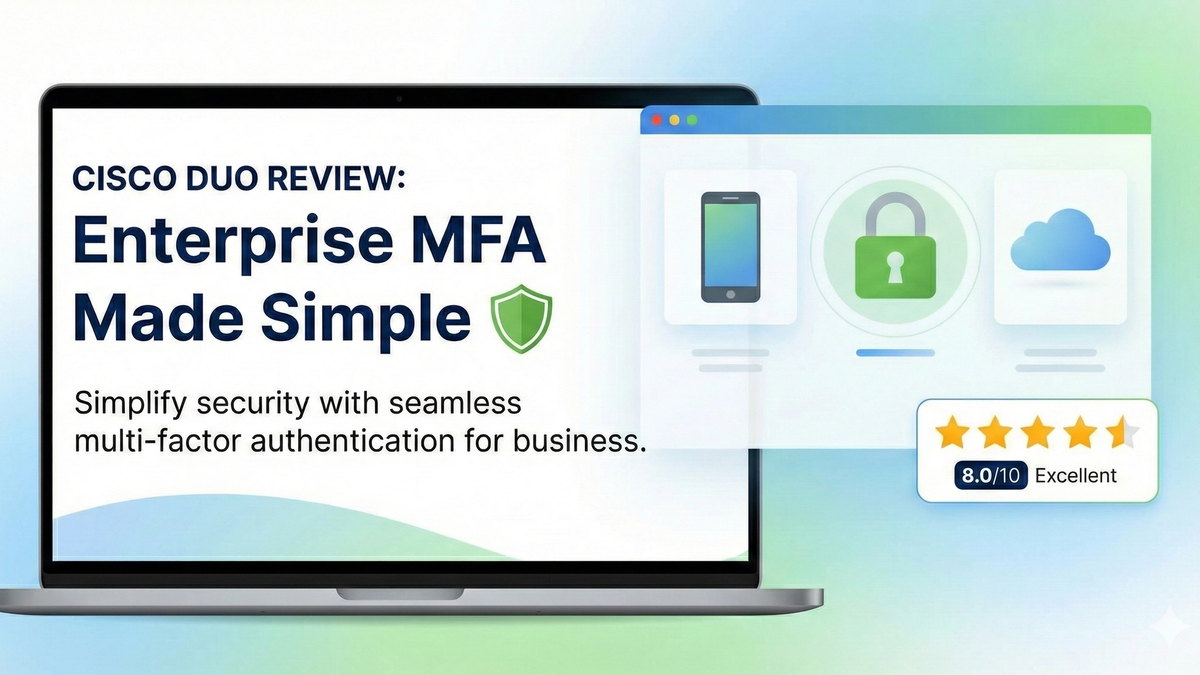
Cisco Duo Review: Enterprise MFA Made Simple
Cisco Duo delivers robust multi-factor authentication with one of the smoothest user experiences in the enterprise MFA space. While pricing can escalate quickly for larger teams, its device trust and adaptive policies make it a solid choice for security-conscious organizations.