
The Fundamentals of Real-Time Cybersecurity News Analysis and Response
In today's hyper-connected digital landscape, cybersecurity threats evolve at a breathtaking pace. A zero-day vulnerability discovered in the morning can be actively exploited by afternoon, poten...
Introduction
In today's hyper-connected digital landscape, cybersecurity threats evolve at a breathtaking pace. A zero-dayZero-Day🛡️A security vulnerability that is exploited or publicly disclosed before the software vendor can release a patchPatch🛡️A software update that fixes security vulnerabilities, bugs, or adds improvements to an existing program., giving developers 'zero days' to fix it. vulnerabilityVulnerability🛡️A weakness in software, hardware, or processes that can be exploited by attackers to gain unauthorized access or cause harm. discovered in the morning can be actively exploitedActively Exploited🛡️A vulnerability that attackers are currently using in real-world attacks, requiring immediate patching regardless of severity score. by afternoon, potentially affecting thousands of organizations before the workday ends. For security professionals, IT administrators, and anyone responsible for protecting digital assets, the ability to quickly analyze, interpret, and respond to cybersecurity news has become not just valuable—it's essential.
Real-time cybersecurity news analysis and response refers to the systematic process of monitoring, evaluating, and acting upon security-related information as it emerges. This practice goes far beyond simply reading headlines; it involves critically assessing threat intelligence, understanding the context and implications of security events, determining organizational relevance, and implementing appropriate defensive measures—all within compressed timeframes that can mean the difference between prevention and breach.
The challenge facing modern security teams is immense. According to industry research, the average time between vulnerability disclosure and active exploitation has shrunk dramatically, sometimes to mere hours. Meanwhile, the volume of security information has exploded, with thousands of vulnerabilities disclosed annually, constant threat actor activity, and an endless stream of security advisories, patches, and recommendations flooding multiple channels.
This article provides a comprehensive guide to establishing and maintaining an effective real-time cybersecurity news analysis and response capability. Whether you're a seasoned security professional looking to refine your processes or a technology leader seeking to build this competency within your organization, you'll find practical frameworks, actionable strategies, and concrete tools to enhance your security posture through better information management.
Core Concepts
The Information Lifecycle in Cybersecurity
Understanding real-time cybersecurity news analysis begins with recognizing the typical lifecycle of security information. Most security events follow a predictable pattern: initial discovery or detection, preliminary reporting, technical analysis and verification, broader disclosure, exploitation (in the case of vulnerabilities), and finally, remediation and lessons learned.
Each stage of this lifecycle presents different information characteristics and requires different analytical approaches. Early-stage information might be incomplete, unverified, or speculative, demanding critical evaluation and corroboration. Later stages typically offer more concrete details but may arrive too late for optimal defensive action. The most effective security teams develop capabilities to engage with information across all lifecycle stages.
Signal Versus Noise
One of the fundamental challenges in real-time cybersecurity analysis is distinguishing meaningful signals from background noise. In any given day, hundreds of security-related articles, advisories, social media posts, and announcements emerge. Only a fraction of these will be relevant to your specific environment, assets, or risk profile.
Signal detection requires both filtering mechanisms and analytical judgment. Filtering involves establishing criteria for what information reaches your attention—which sources you monitor, which keywords trigger alerts, and which severity thresholds warrant immediate review. Analytical judgment involves assessing the credibility of sources, evaluating the potential impact on your systems, and determining the urgency of response.
The Time Factor
Time represents perhaps the most critical variable in cybersecurity news response. The concept of "time to exploitation" measures how quickly threat actors begin leveraging newly disclosed vulnerabilities. Research consistently shows this window shrinking, with some high-profile vulnerabilities being exploited within hours of public disclosure.
This reality creates a fundamental tension: the need for speed versus the need for accuracy. Responding too quickly based on incomplete information can waste resources or create unnecessary disruption. Responding too slowly can leave systems vulnerable. Effective real-time analysis balances these competing demands through structured processes that accelerate decision-making without compromising quality.
Context and Environmental Awareness
Not all cybersecurity news affects all organizations equally. A critical vulnerability in a Linux kernel module matters immensely to organizations running Linux servers but may be irrelevant to those operating purely Windows environments. A ransomware campaign targeting healthcare institutions requires urgent attention from hospitals but might be lower priority for financial services firms.
Effective real-time analysis therefore requires deep environmental awareness—comprehensive knowledge of your technology stack, network architecture, critical assets, existing security controls, and business context. This awareness enables rapid relevance assessment, allowing security teams to quickly determine whether a particular piece of news demands immediate action or simply awareness.
Threat Intelligence Integration
Real-time cybersecurity news exists within the broader ecosystem of threat intelligence. While news sources provide one information stream, comprehensive analysis integrates multiple intelligence sources: vulnerability databases, threat feeds, indicators of compromise (IoCs), dark web monitoring, information sharing communities, and vendor advisories.
The most sophisticated approaches treat news analysis as one component of a unified threat intelligence program, where different information sources reinforce and validate each other, providing richer context and higher confidence assessments.
How It Works
Establishing Information Sources
The foundation of effective real-time analysis is a well-curated collection of information sources. These typically fall into several categories:
**Official Sources**: Government cybersecurity agencies (CISA, NCSC, etc.), vendor security bulletins (Microsoft Security Response Center, Red Hat Security Advisories), and standards organizations (CVE database, NVD) provide authoritative, verified information. These sources prioritize accuracy over speed and serve as reference points for verification.
**News Aggregators and Security Media**: Specialized cybersecurity publications (Bleeping Computer, The Hacker News, Krebs on Security) offer faster reporting with varying levels of technical depth. These sources balance speed with journalistic verification and often break stories before official channels.
**Social Media and Community Sources**: Security researchers, incident responders, and threat intelligence professionals frequently share early indicators and preliminary analysis on Twitter, Mastodon, and specialized forums. These sources offer the fastest information but require the most critical evaluation.
**Commercial Threat Intelligence Platforms**: Services like Recorded Future, Mandiant Advantage, or CrowdStrike Intelligence provide curated, analyzed intelligence with organizational context. These typically combine automated collection with expert analysis.
The optimal approach combines sources across these categories, creating redundancy for verification while ensuring comprehensive coverage.
Monitoring and Collection
Once sources are identified, establishing efficient monitoring mechanisms becomes crucial. Manual monitoring—regularly checking websites and social media—doesn't scale and introduces delays. Instead, effective programs implement automated collection through several approaches:
RSS feeds and news aggregators allow centralized monitoring of multiple sources. Tools like Feedly or self-hosted options like Miniflux can aggregate hundreds of sources into a single interface with filtering and prioritization capabilities.
Social media monitoring tools enable tracking of specific accounts, hashtags, or keywords across platforms. TweetDeck, Hootsuite, or specialized security-focused tools can create filtered streams of relevant content.
Email subscriptions and mailing lists from vendors, information sharing organizations (ISACs), and security communities deliver targeted information directly to your inbox.
Security Information and Event Management (SIEM) systems and threat intelligence platforms can automatically ingest structured threat data from multiple feeds, correlating it with internal security events.
The key is creating a multi-channel monitoring system that balances comprehensive coverage with manageable information volume.
Triage and Prioritization
As information flows in, rapid triage determines what requires immediate attention versus what can be reviewed during routine analysis cycles. Effective triage relies on established criteria:
**Severity indicators**: Certain keywords or classifications trigger immediate escalation—active exploitation, ransomware campaigns, critical vulnerabilities in widely-deployed technologies, or confirmed breaches of similar organizations.
**Environmental matching**: Automated or rapid manual assessment determines whether the threat affects technologies, applications, or configurations present in your environment.
**Source credibility**: Information from established, reliable sources receives priority over uncorroborated reports from unknown sources.
**Threat actor relevance**: Intelligence about threat groups known to target your industry or organization type receives elevated priority.
Many organizations implement a tiered triage system: Tier 1 items demand immediate response within minutes or hours, Tier 2 items require analysis within the business day, and Tier 3 items enter the backlog for routine review.
Analysis and Verification
Once information is triaged, deeper analysis assesses its accuracy, relevance, and implications. This stage involves:
**Source validation**: Cross-referencing information across multiple sources, evaluating the track record and expertise of the reporting entity, and distinguishing confirmed facts from speculation or preliminary reporting.
**Technical assessment**: Understanding the technical details of vulnerabilities or threats, including affected versions, exploitExploit🛡️Code or technique that takes advantage of a vulnerability to cause unintended behavior, such as gaining unauthorized access. requirements, attack vectors, and potential impact.
**Environmental analysis**: Determining whether and where affected technologies exist in your environment, what data or systems might be at risk, and whether existing security controls provide protection.
**Impact evaluation**: Assessing potential business consequences including operational disruption, data exposure, compliance implications, and reputational risks.
**Remediation requirements**: Identifying available mitigations, patches, or configuration changes, understanding implementation complexity, and assessing potential side effects.
This analysis produces an actionable assessment that guides response decisions.
Decision-Making and Response
Based on the analysis, security teams must decide on appropriate responses. Options typically include:
**Immediate remediation**: Applying patches, implementing configuration changes, or deploying compensating controls to address confirmed threats to vulnerable systems.
**Enhanced monitoring**: Implementing additional logging, detection rules, or behavioral analysis when immediate remediation isn't feasible but elevated risk exists.
**Communication and awareness**: Alerting relevant stakeholders, system owners, or user communities about
Related Reviews
REOLINK 4K Security Camera System Review: Professional PoE Surveillance at DIY Prices
The REOLINK 4K PoE security system delivers 8MP clarity, smart person/vehicle detection, 24/7 recording with 4TB storage, and plug-and-play installation for comprehensive home surveillance.
Ring Outdoor Cam Pro Review: 4K Security Camera with Radar-Powered Motion Detection
The Ring Outdoor Cam Pro delivers Retinal 4K video, 10x enhanced zoom, Low-Light Sight for true color night vision, and radar-powered 3D motion detection for precise security alerts.
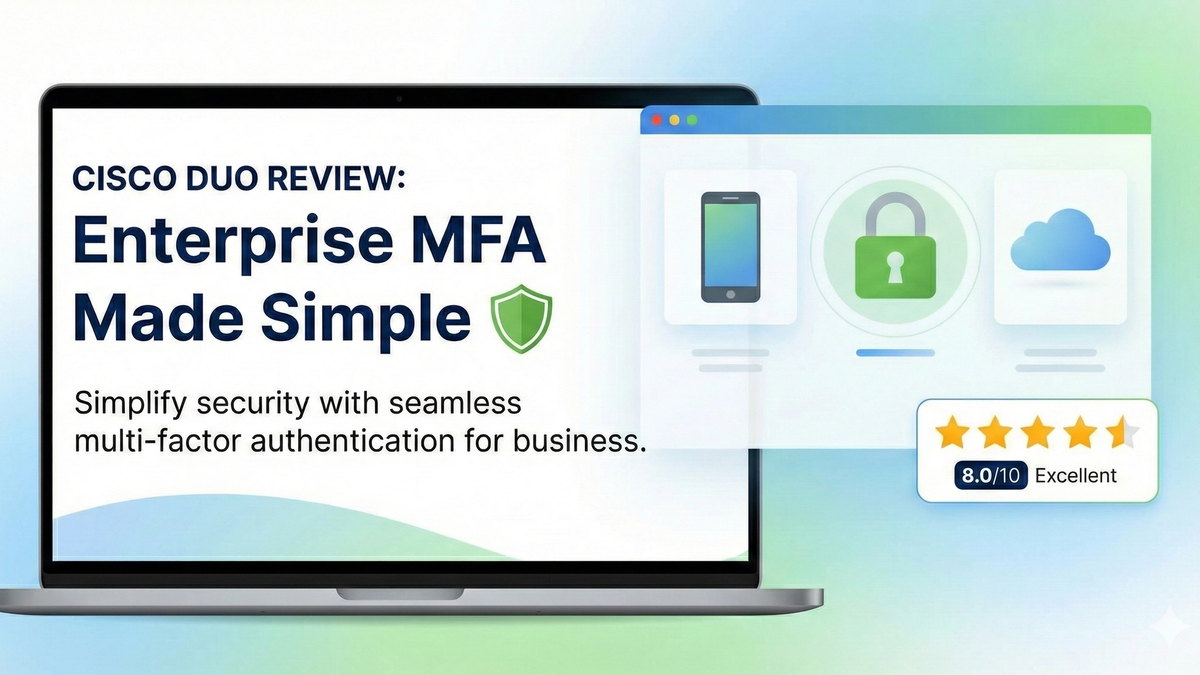
Cisco Duo Review: Enterprise MFA Made Simple
Cisco Duo delivers robust multi-factor authentication with one of the smoothest user experiences in the enterprise MFA space. While pricing can escalate quickly for larger teams, its device trust and adaptive policies make it a solid choice for security-conscious organizations.