Understanding Hourly Threat Intelligence Monitoring and Why It Matters
In today's digital landscape, cyber threats evolve at an unprecedented pace. What was secure yesterday might be vulnerable today. While many organizations conduct weekly or monthly security revie...
Introduction
In today's digital landscape, cyber threats evolve at an unprecedented pace. What was secure yesterday might be vulnerable today. While many organizations conduct weekly or monthly security reviews, the reality is that threat actors don't operate on convenient schedules—they work continuously, probing for weaknesses and exploiting vulnerabilities the moment they're discovered.
Hourly threat intelligence monitoring represents a fundamental shift in how organizations approach cybersecurity. Rather than periodic check-ins, this approach involves continuous, automated surveillance of threat intelligence feeds, indicators of compromise (IOCs), and security events on an hourly basis. This frequency might seem excessive at first glance, but when you consider that the average time between a vulnerabilityVulnerability🛡️A weakness in software, hardware, or processes that can be exploited by attackers to gain unauthorized access or cause harm. disclosure and active exploitation can be measured in hours—not days—the importance becomes crystal clear.
This article will explore what hourly threat intelligence monitoring entails, why it matters for organizations of all sizes, and how you can implement it effectively within your security operations. Whether you're a security professional looking to enhance your organization's defenses or a technology leader seeking to understand modern threat detection capabilities, this comprehensive guide will provide the knowledge you need to make informed decisions about your security posture.
Core Concepts
What Is Threat Intelligence?
Before diving into hourly monitoring, we need to establish what threat intelligence actually means. Threat intelligence is evidence-based knowledge about existing or emerging threats to an organization's assets. This includes information about threat actors, their tactics, techniques, and procedures (TTPs), indicators of compromise, vulnerabilities, and security events.
Threat intelligence operates at several levels:
**Strategic intelligence** provides high-level information about cybersecurity trends, threat actor motivations, and risk landscapes. This typically informs executive decision-making and long-term security strategy.
**Tactical intelligence** focuses on threat actors' TTPs, helping security teams understand how attacks are conducted and what defensive measures might be effective.
**Operational intelligence** provides specific information about incoming attacks, including details about campaigns, infrastructure, and timing.
**Technical intelligence** consists of specific indicators of compromise such as malicious IP addresses, file hashes, domain names, and URLs that can be directly used to detect or block threats.
The Time Factor: Why Hourly?
The choice of hourly monitoring isn't arbitrary—it reflects the reality of modern cyber threat timelines. Research consistently shows that:
Daily monitoring creates a window of up to 24 hours during which your organization remains unaware of emerging threats. Hourly monitoring reduces this window to 60 minutes or less, dramatically decreasing the time between threat emergence and defensive response.
Key Components of Threat Intelligence Monitoring
**Threat Feeds**: These are streams of threat data from various sources, including commercial vendors, open-source projects, information sharing organizations, and government agencies. Quality threat feeds provide timely, relevant, and actionable intelligence.
**Indicators of Compromise (IOCs)**: These are forensic artifacts that suggest a system has been breached. IOCs include IP addresses, domain names, file hashes, registry keys, and other technical evidence of malicious activity.
**Security Information and Event Management (SIEM)**: These platforms aggregate and analyze security data from across your infrastructure, correlating events to identify potential threats.
**Threat Intelligence Platforms (TIPs)**: These specialized tools collect, aggregate, and analyze threat intelligence from multiple sources, helping security teams prioritize and respond to threats.
**Automated Response Systems**: These tools can automatically implement defensive measures based on threat intelligence, such as blocking malicious IPs or quarantining suspicious files.
How It Works
The Hourly Monitoring Cycle
Hourly threat intelligence monitoring operates on a continuous cycle that repeats every 60 minutes. Understanding this cycle helps clarify how the system maintains constant vigilance without overwhelming security teams.
**Minute 0-10: Data Collection**
The cycle begins with automated collection of threat intelligence from configured sources. This includes:
Modern threat intelligence platforms can ingest data from dozens or even hundreds of sources simultaneously, aggregating millions of data points each hour.
**Minute 10-30: Normalization and Enrichment**
Raw threat data arrives in various formats and with different levels of detail. During this phase, the system:
This normalization process is critical because it transforms disparate data into actionable intelligence that security teams can actually use.
**Minute 30-45: Analysis and Correlation**
With normalized data in hand, the system performs sophisticated analysis:
Advanced systems employ machine learning algorithms to detect anomalies and predict emerging threats based on historical patterns.
**Minute 45-55: Alerting and Response**
Based on the analysis, the system generates alerts and may initiate automated responses:
**Minute 55-60: Documentation and Preparation**
The cycle concludes with housekeeping tasks:
Then the cycle begins again.
Integration Architecture
Effective hourly monitoring requires integration across your entire security infrastructure. A typical architecture includes:
**Collection Layer**: API connections to threat feeds, log collectors gathering data from infrastructure, and sensors monitoring network traffic.
**Processing Layer**: Threat intelligence platforms that normalize and enrich data, SIEM systems that correlate events, and analytics engines that identify patterns.
**Response Layer**: Security orchestration and automated response (SOAR) platforms, firewallFirewall🌐Security system that monitors and controls network traffic based on predetermined rules. and IPS management systems, and endpoint detection and response (EDR) tools.
**Presentation Layer**: Security dashboards for real-time visibility, reporting tools for documentation and compliance, and alerting systems for human notification.
This layered approach ensures that threat intelligence flows seamlessly from collection through response without requiring constant manual intervention.
Real-World Examples
Example 1: Stopping a Zero-Day ExploitExploit🛡️Code or technique that takes advantage of a vulnerability to cause unintended behavior, such as gaining unauthorized access.
In March 2021, Microsoft disclosed critical vulnerabilities in Exchange Server (CVE-2021-26855 and related vulnerabilities). Within hours, threat actors began mass exploitation attempts worldwide.
An organization with hourly monitoring in place experienced the following timeline:
Without hourly monitoring, this organization might not have detected the threat until their daily security review 20+ hours later—more than enough time for attackers to establish persistence and begin lateral movementLateral Movement🛡️Techniques attackers use to move through a network after initial compromise, seeking additional systems to control and data to steal..
Example 2: Blocking a Phishing Campaign
A financial services company implemented hourly monitoring integrated with their email security gateway. During one monitoring cycle, the system:
The entire process completed within 15 minutes of the campaign's IOCs appearing in threat feeds. The organization avoided potential credential compromise affecting dozens of employees.
Example 3: Detecting Insider Threat Indicators
A technology company's hourly monitoring system correlated multiple seemingly innocuous events:
Related Reviews
REOLINK 4K Security Camera System Review: Professional PoE Surveillance at DIY Prices
The REOLINK 4K PoE security system delivers 8MP clarity, smart person/vehicle detection, 24/7 recording with 4TB storage, and plug-and-play installation for comprehensive home surveillance.
Ring Outdoor Cam Pro Review: 4K Security Camera with Radar-Powered Motion Detection
The Ring Outdoor Cam Pro delivers Retinal 4K video, 10x enhanced zoom, Low-Light Sight for true color night vision, and radar-powered 3D motion detection for precise security alerts.
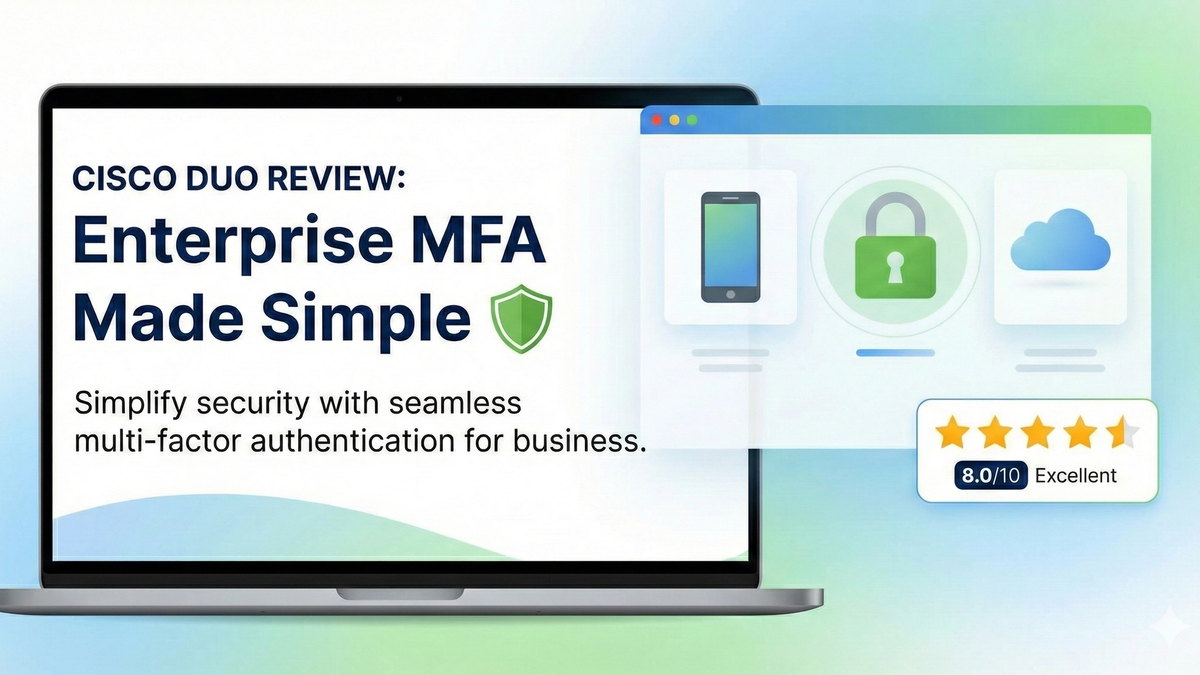
Cisco Duo Review: Enterprise MFA Made Simple
Cisco Duo delivers robust multi-factor authentication with one of the smoothest user experiences in the enterprise MFA space. While pricing can escalate quickly for larger teams, its device trust and adaptive policies make it a solid choice for security-conscious organizations.